Analyze Data and gain insights with AI
Data can tell us fascinating stories - if we know how to listen. While traditional data analysis often feels like searching for needles in digital haystacks, AI has opened up new possibilities for understanding what our data is trying to tell us. Whether you're curious about customer behavior patterns or trying to spot emerging trends, AI tools can help you find meaningful insights without getting lost in spreadsheet wilderness. In this guide, we'll explore practical ways to use AI for data analysis, walking through real-world examples that show how these tools can help you understand your data more deeply and make more confident decisions.
In this guide, you will learn:
- A 6-step process for transforming raw data into actionable business insights with AI
- How to structure your analysis objectives to get more targeted results
- Techniques for using AI to clean and preprocess your data effectively
- Methods for creating compelling data visualizations that tell your data's story
- Strategies for identifying key patterns and trends in complex datasets
- How to develop data-driven action plans from your analytical findings
Real-World Scenario
Meet Alex, a sales manager at TechTrends, a mid-sized e-commerce company selling electronics. Alex has just completed a major sales campaign for the last quarter and needs to analyze the sales data to understand which products performed best, identify trends in customer purchases, and determine which regions and customer segments drove the most sales. Alex has access to a dataset containing product information, sales figures, and customer details but is struggling to extract meaningful insights efficiently.
Step 1: Define Your Objective
Alex's objectives:
- Identify the best-performing products
- Analyze sales trends across regions and customer segments
- Determine which factors contribute most to revenue generation
Sample Dataset:
| Product ID | Product Name | Sales Region | Customer Segment | Units Sold | Revenue | Date of Sale |
| 101 | Smart TV 55" | West Coast | Residential | 250 | 200000 | 7/15/24 |
| 102 | Wireless Headphones | Midwest | Business | 300 | 45000 | 7/18/24 |
| 103 | 4K Action Camera | East Coast | Residential | 150 | 60000 | 7/20/24 |
| 104 | Laptop 15" | West Coast | Business | 200 | 180000 | 7/22/24 |
| 105 | Bluetooth Speaker | Midwest | Residential | 500 | 70000 | 7/25/24 |
| 106 | Smartwatch Series 6 | East Coast | Residential | 400 | 120000 | 7/28/24 |
| 107 | Gaming Console | West Coast | Business | 180 | 160000 | 7/30/24 |
| 108 | Desktop Computer | Midwest | Business | 90 | 90000 | 7/30/24 |
| 109 | Noise-Cancelling Earbuds | East Coast | Residential | 350 | 52500 | 8/1/24 |
Step 2: Initial AI Consultation
Alex's prompt:
AI's response:
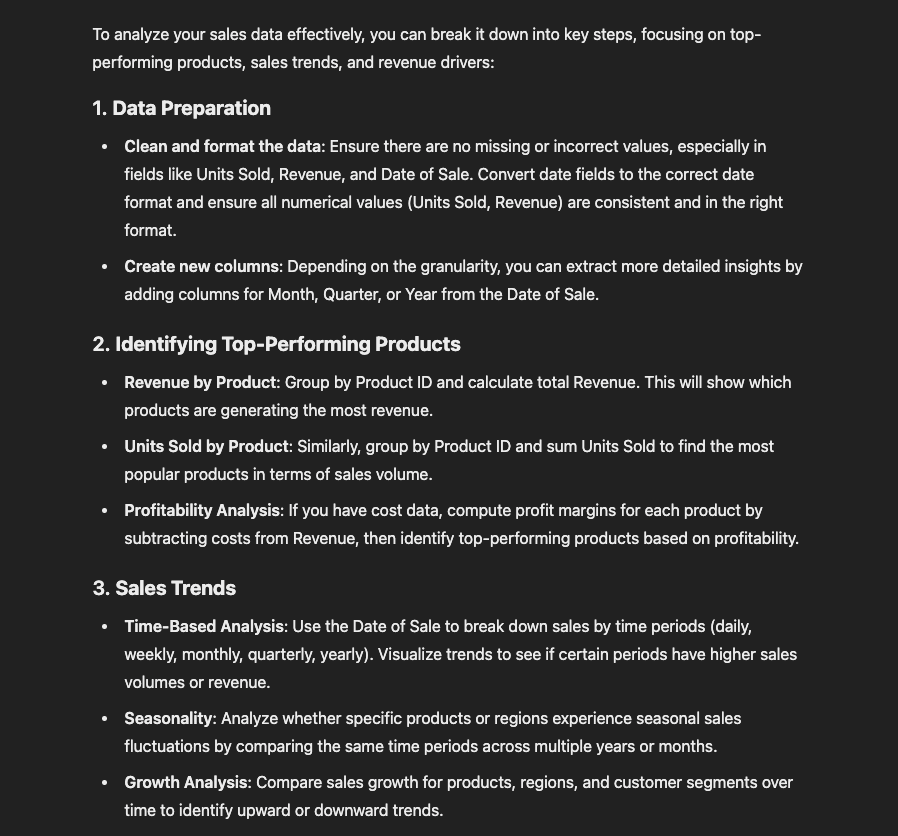
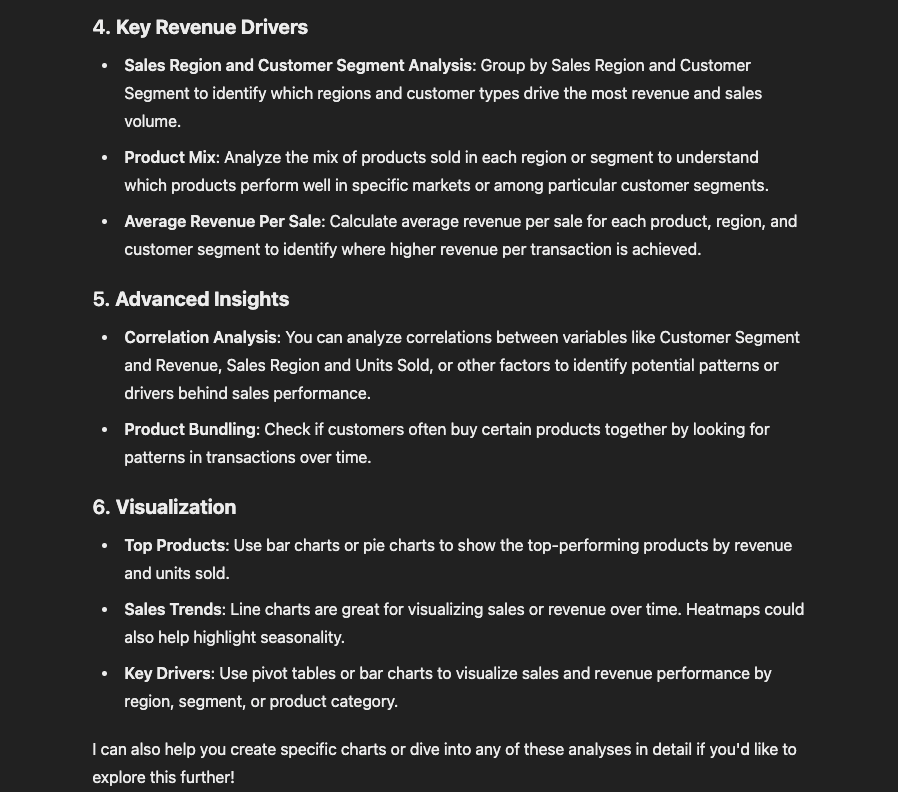
Step 3: Data Preprocessing and Exploratory Data Analysis
Alex's prompt:
AI's response:
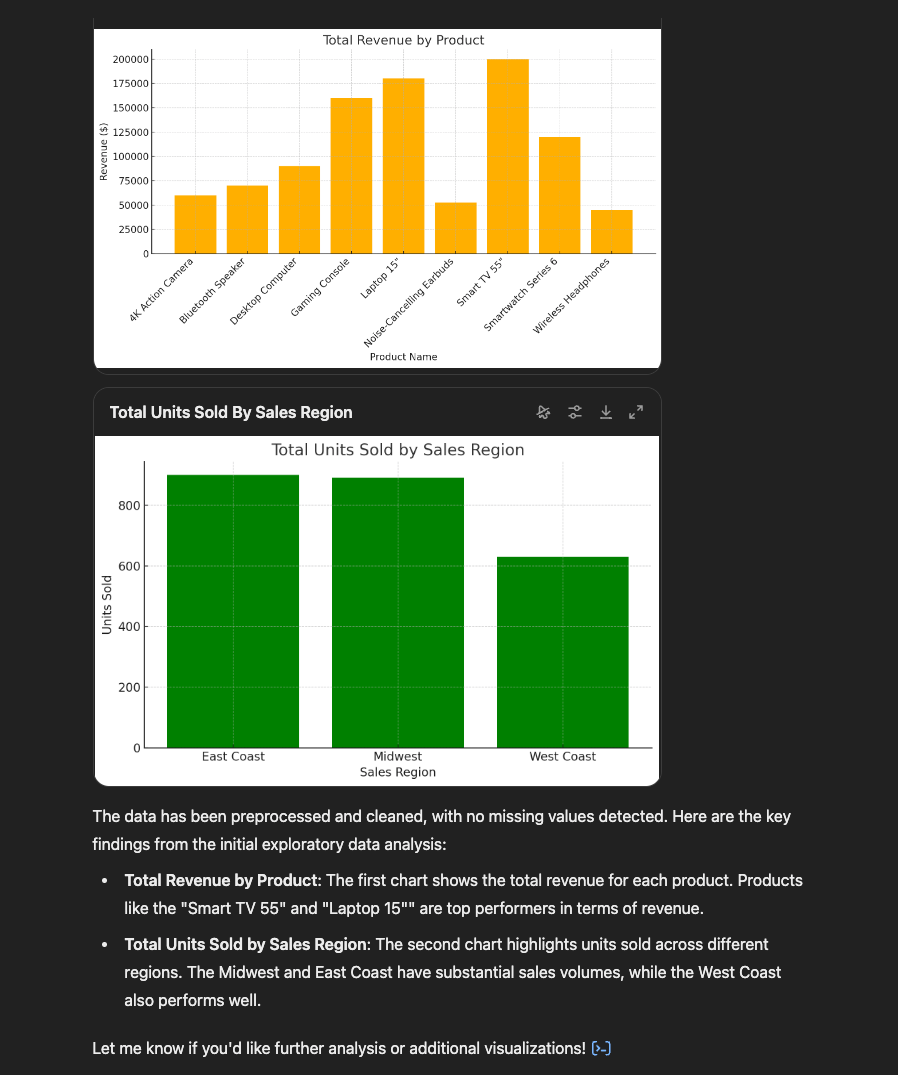
These initial visualizations provide Alex a good starting point for understanding the trends in data.
Step 4: In-Depth Analysis
Alex's prompt:
AI's response:
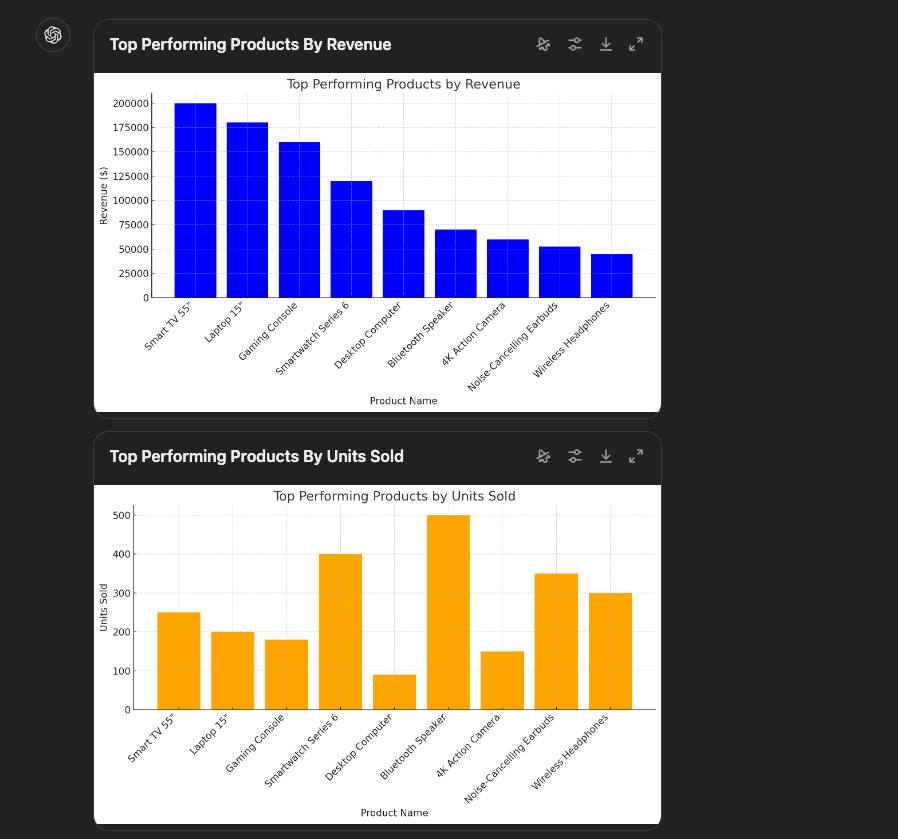
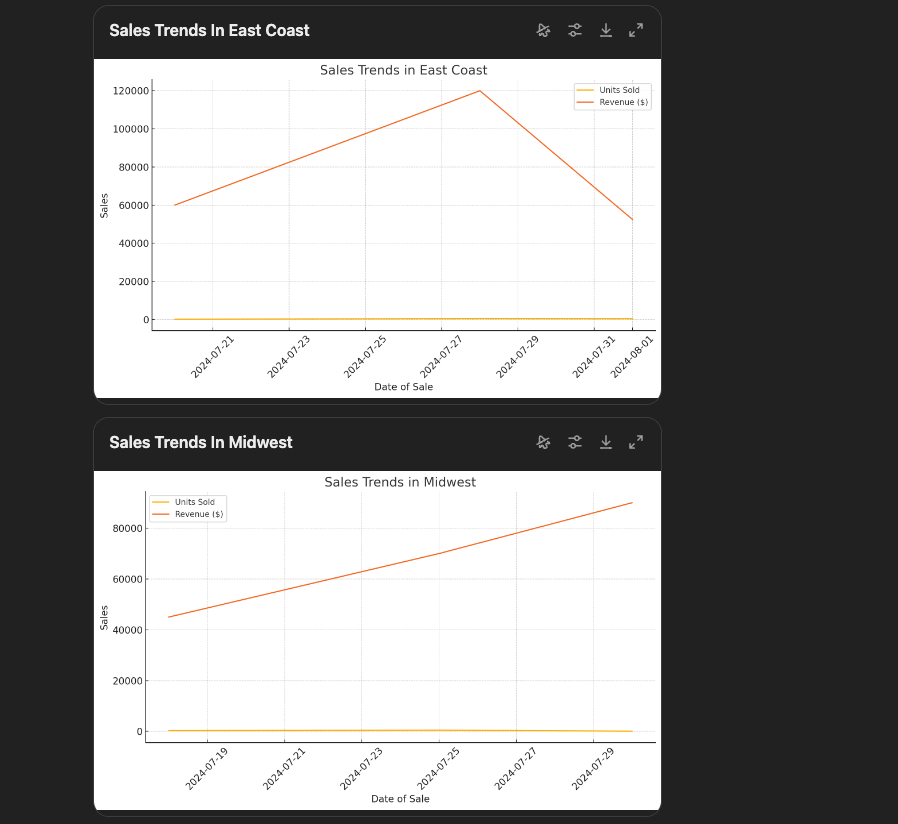
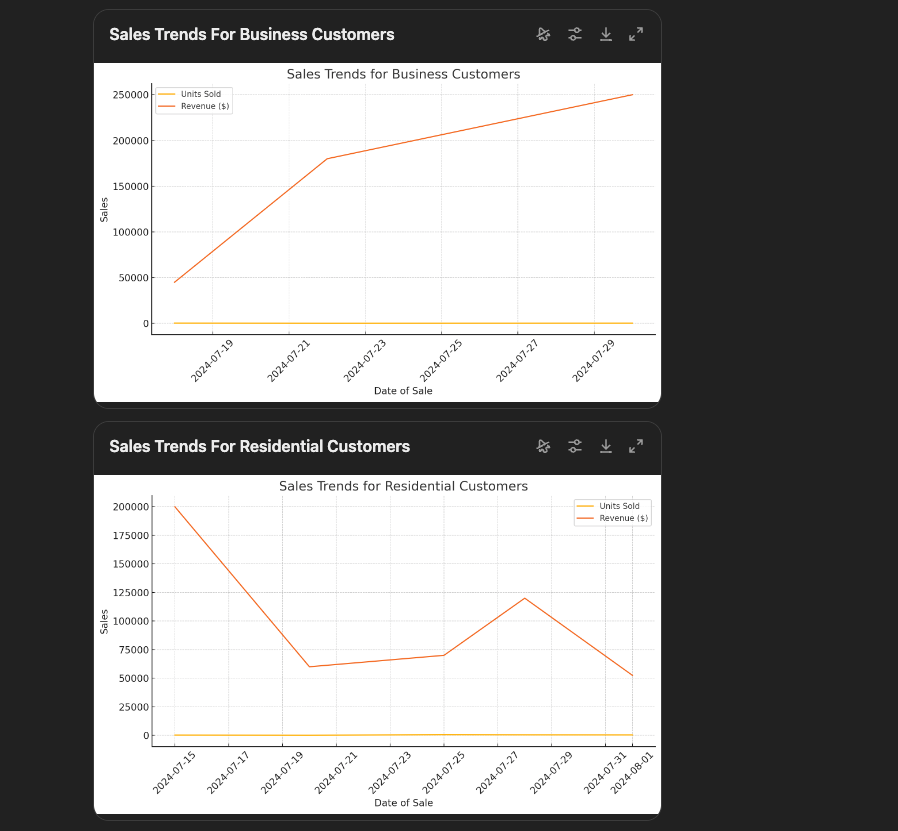
Images speak a thousand words. These images clearly depict regional and product trends.
Step 5: Action Planning
Alex's prompt:
AI's response:
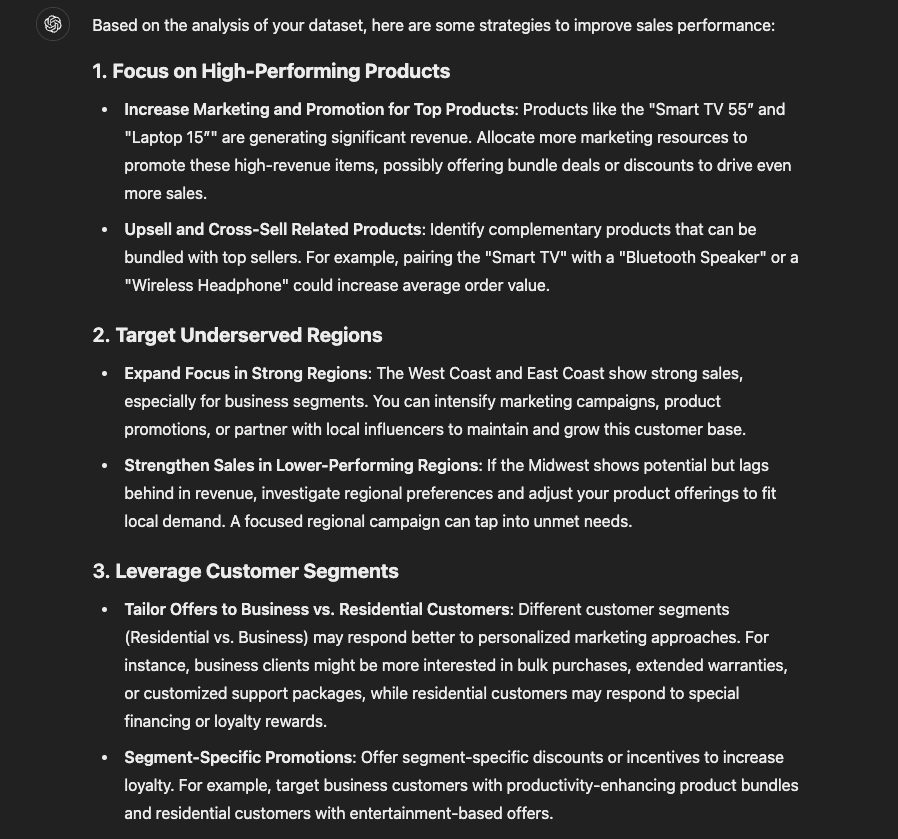
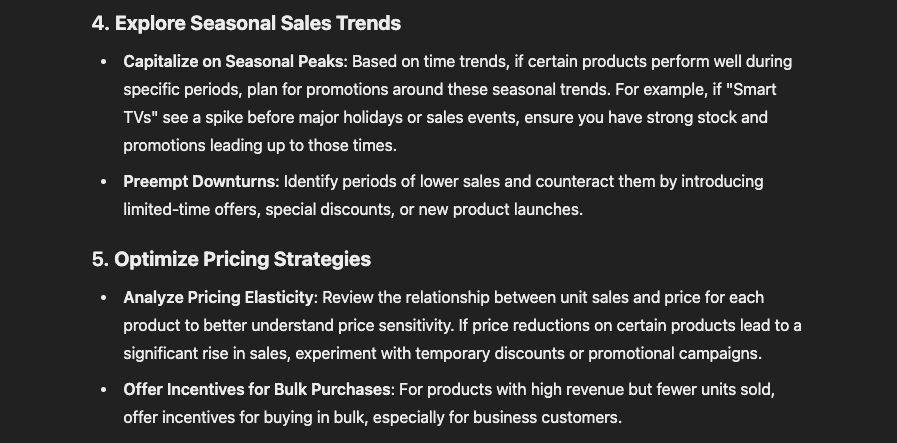
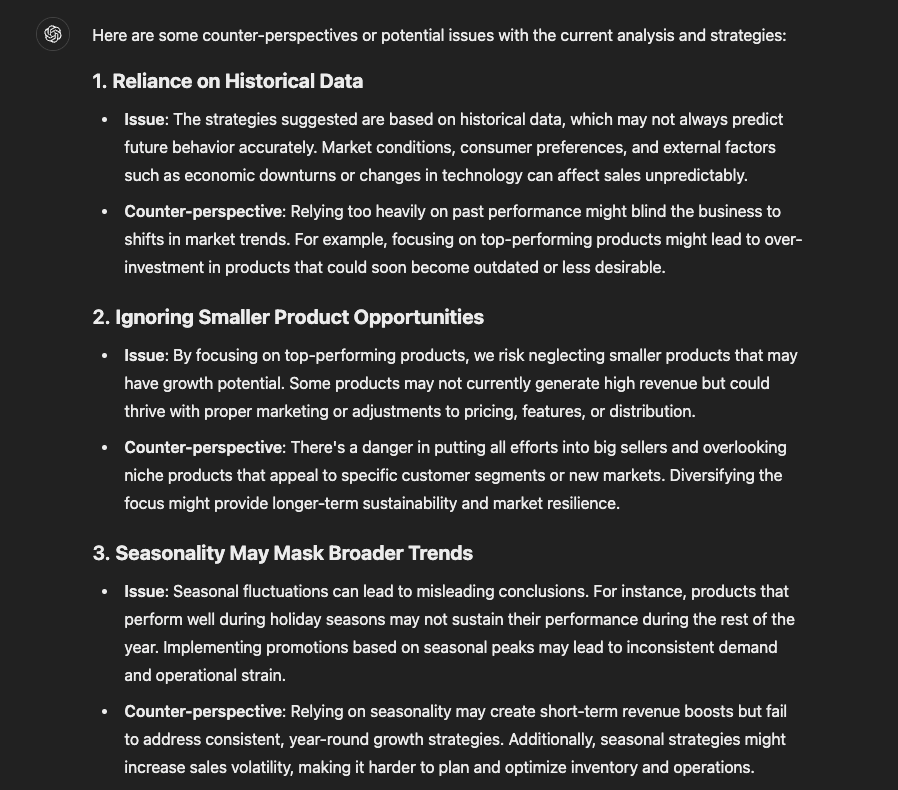
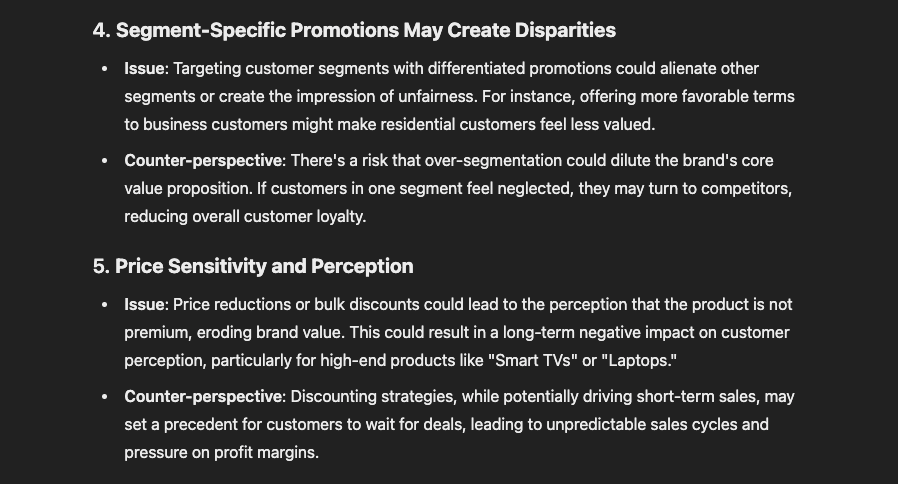
Step 6: Consider Counter Perspectives
Alex's prompt:
AI's response:
Pro Tips
- Clearly define your objectives and data limitations before consulting AI
- Regularly validate AI-generated insights against domain expertise and business context
- Use AI as a tool for augmenting, not replacing, human decision-making in data interpretation
- Continuously refine your prompts to get more accurate and relevant analyses. Store successful prompts for future usage with new data.
Considerations
- Ensure data quality, completeness, and representativeness before analysis
- Implement proper data governance and security measures to protect sensitive information
- Consider ethical implications of data usage and decision-making based on AI insights
- Combine AI insights with human expertise and intuition for optimal results
Knowledge Check
1 / 5According to the guide, what is the primary benefit of using AI for data analysis compared to traditional methods?