Analyzing customer sentiment with AI
Every customer interaction tells a story. But when you're dealing with thousands of interactions across multiple channels, how do you piece these stories together? This is where AI-powered sentiment analysis becomes your secret weapon for understanding customer feedback at scale.
Modern businesses struggle with an overwhelming volume of customer feedback - from social media comments and product reviews to support tickets and survey responses. Hidden in this sea of data are crucial insights about your products, services, and customer experience. The challenge isn't just collecting this feedback; it's making sense of it quickly enough to take action.
Is this guide you will learn how to:
- Learn how to collect and structure customer feedback data from multiple channels for effective AI analysis
- Use AI to perform basic sentiment analysis and classify feedback as positive, negative, or mixed across products
- Identify critical patterns and emerging issues through AI-powered trend analysis
- Create prioritized action plans based on AI sentiment insights, with clear timelines and team responsibilities
Real-world Scenario
Marcus Rodriguez, the Voice of Customer Manager at SmartLiving Technologies, a rapidly growing smart home technology company, faces a familiar challenge. With a product line ranging from smart locks to home hubs, and customers across 15 countries, he receives thousands of pieces of feedback weekly.
"The volume of feedback was overwhelming," Marcus explains. "Between app store reviews, support tickets, social media mentions, and customer surveys, we were sitting on a goldmine of insights. But manually analyzing it all would take weeks. By then, the insights would be outdated. We needed a way to understand what our customers were saying in real-time."
Let's follow Marcus's journey as he implements AI-powered sentiment analysis to transform SmartLiving's customer feedback into actionable insights.
Step 1: Data Collection and Preparation
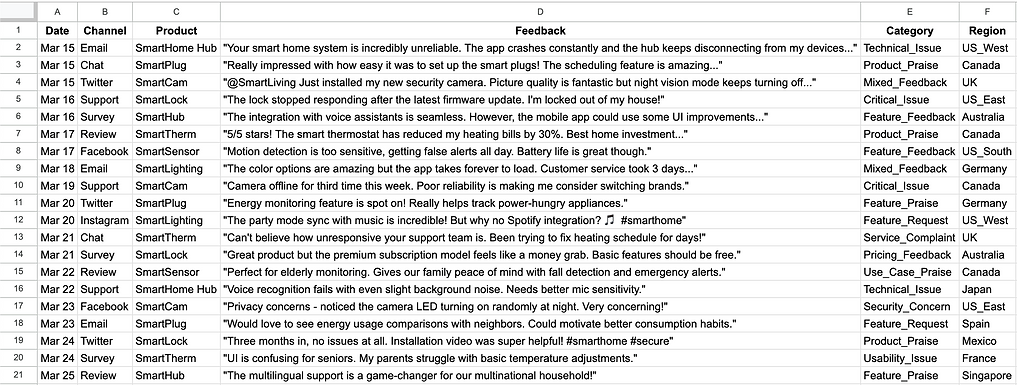
Marcus's prompt:
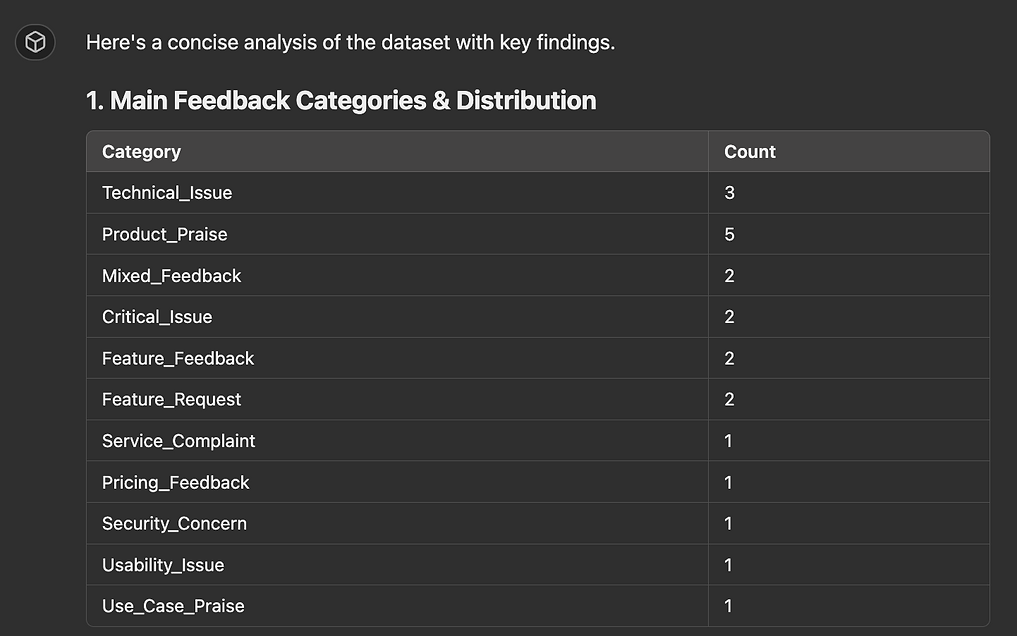
- Identify the main feedback categories and their distribution
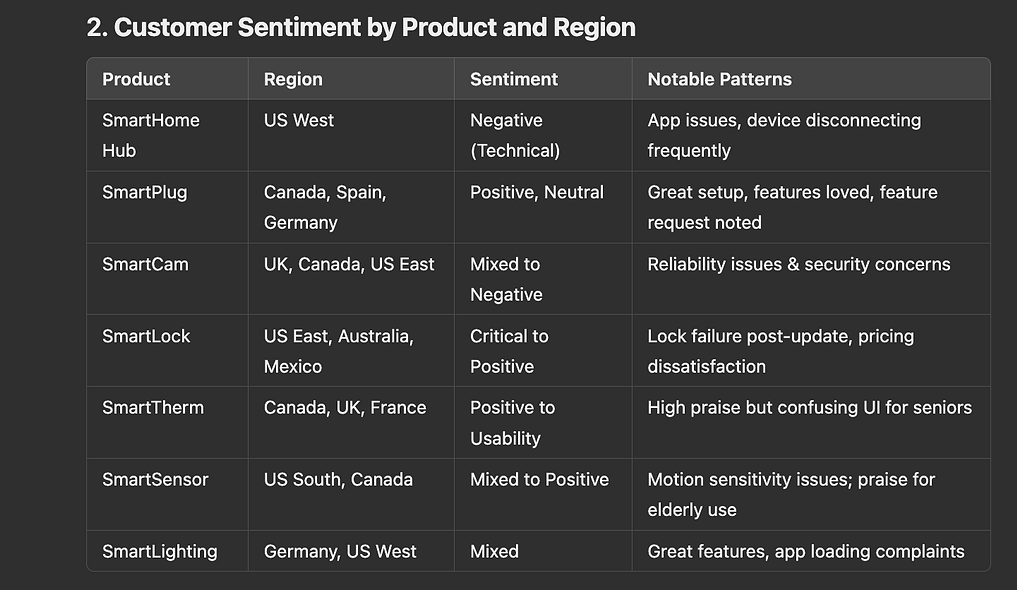
- Highlight any immediate patterns in customer sentiment by product and region
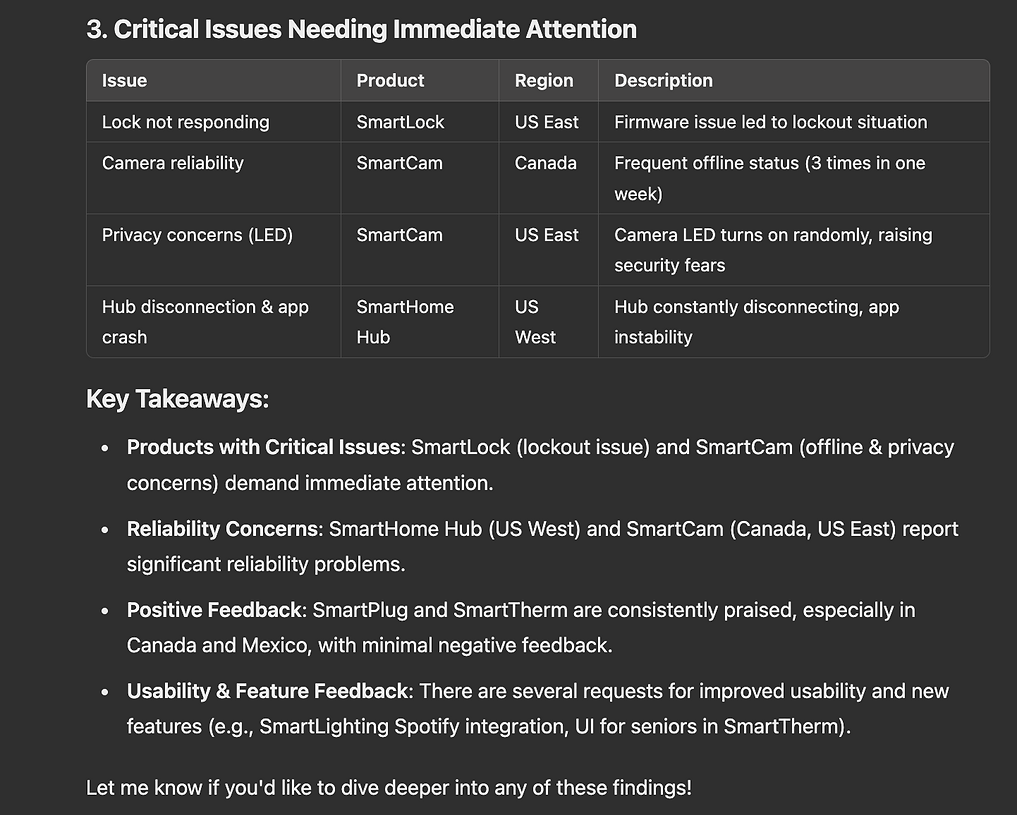
- Flag any critical issues that need immediate attention
AI Response:
Step 2: Basic Sentiment Analysis
Marcus's Prompt:
- Classify each entry as Positive, Negative, or Mixed
- Group by product and identify:
- Most common issues reported
- Most praised features
- Trending concerns
- Flag any feedback indicating:
- Customer churn risk
- Security/safety issues
- Widespread technical problems
AI Response :
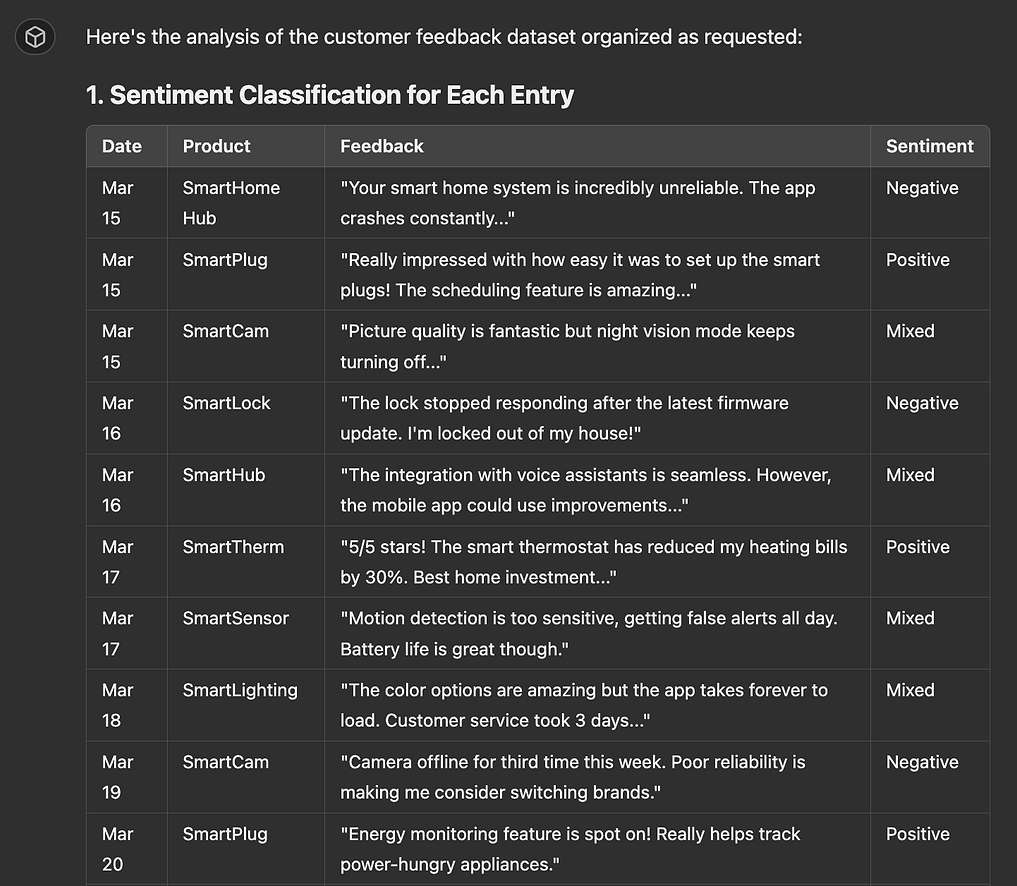
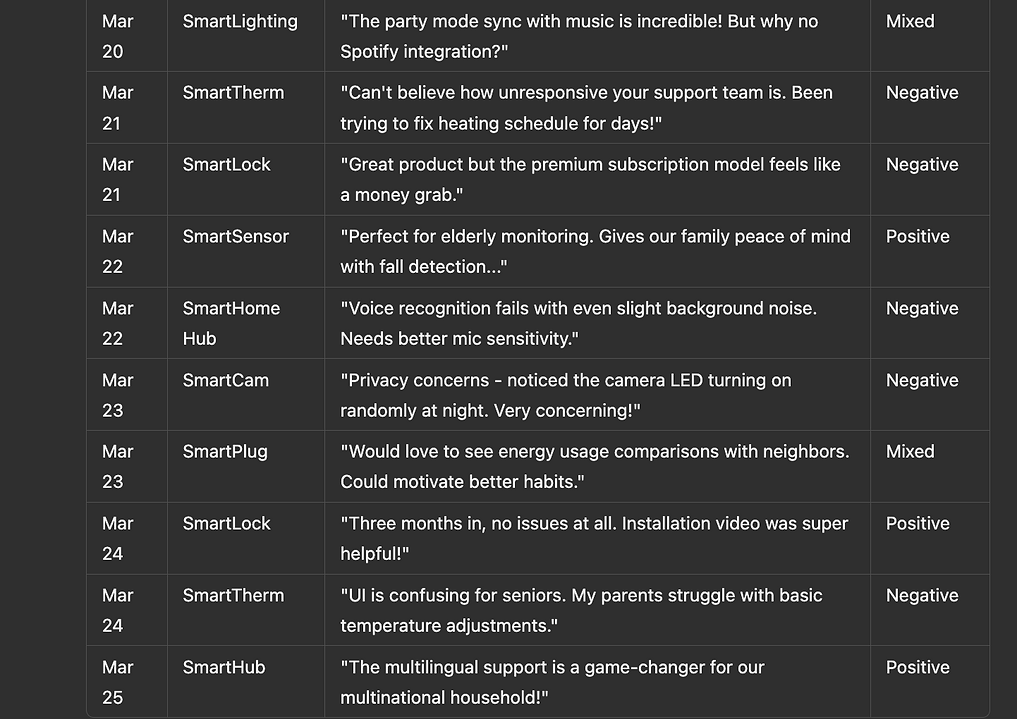
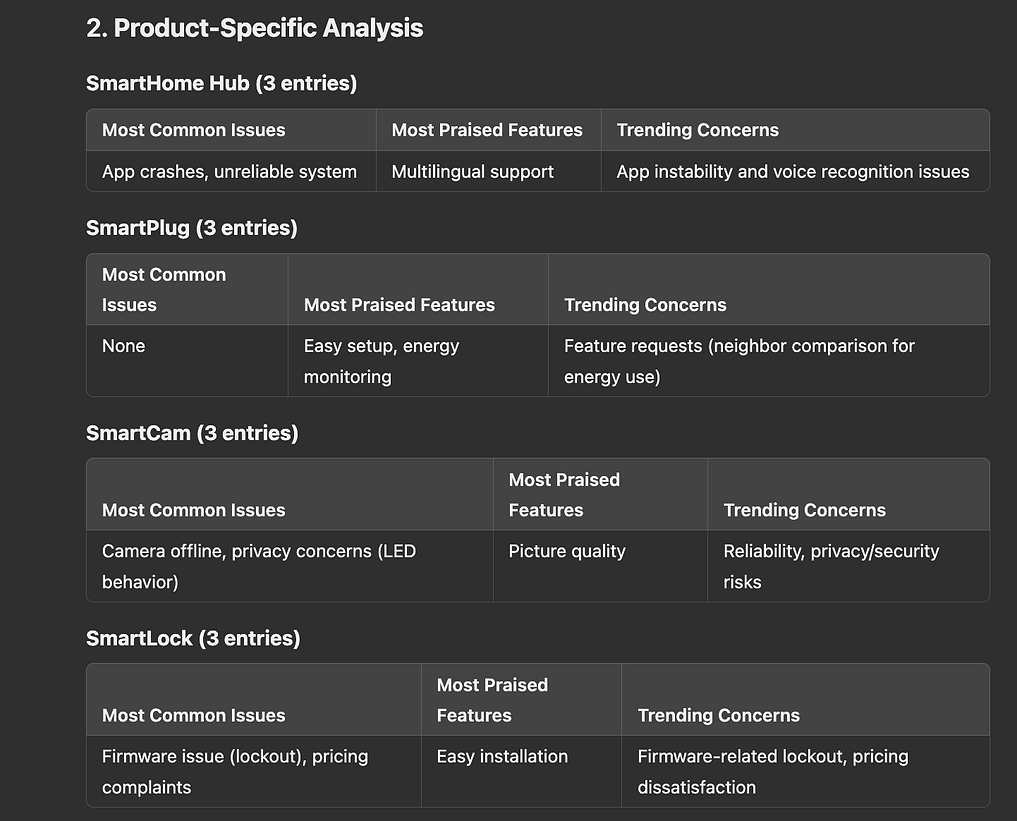
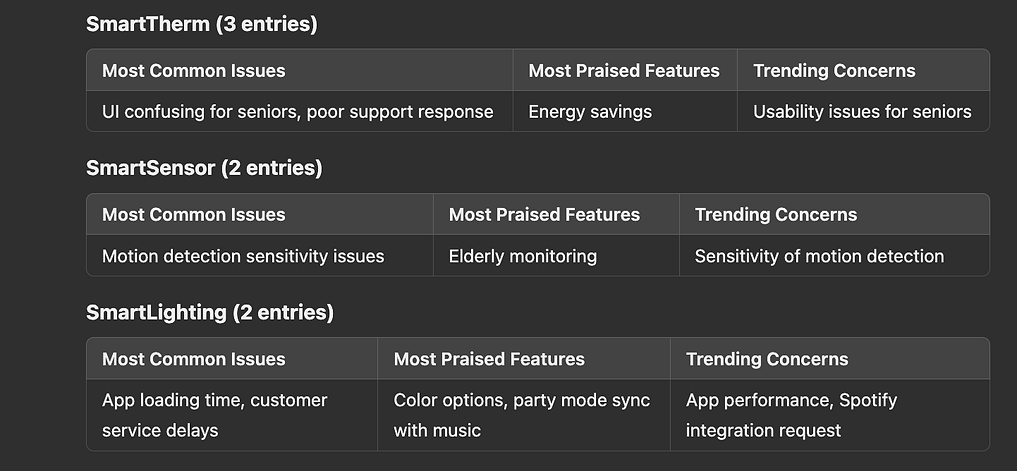
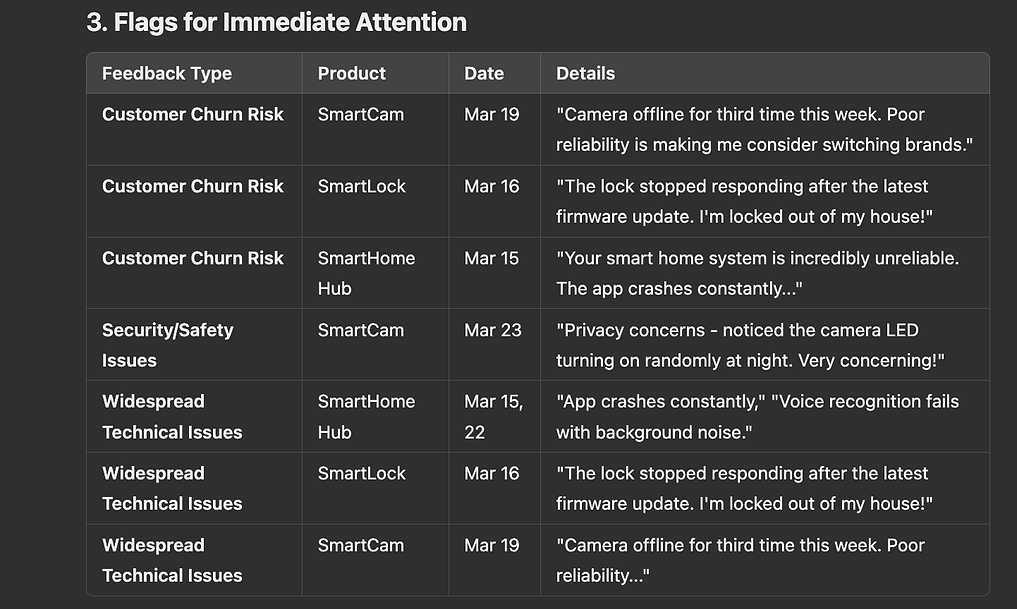
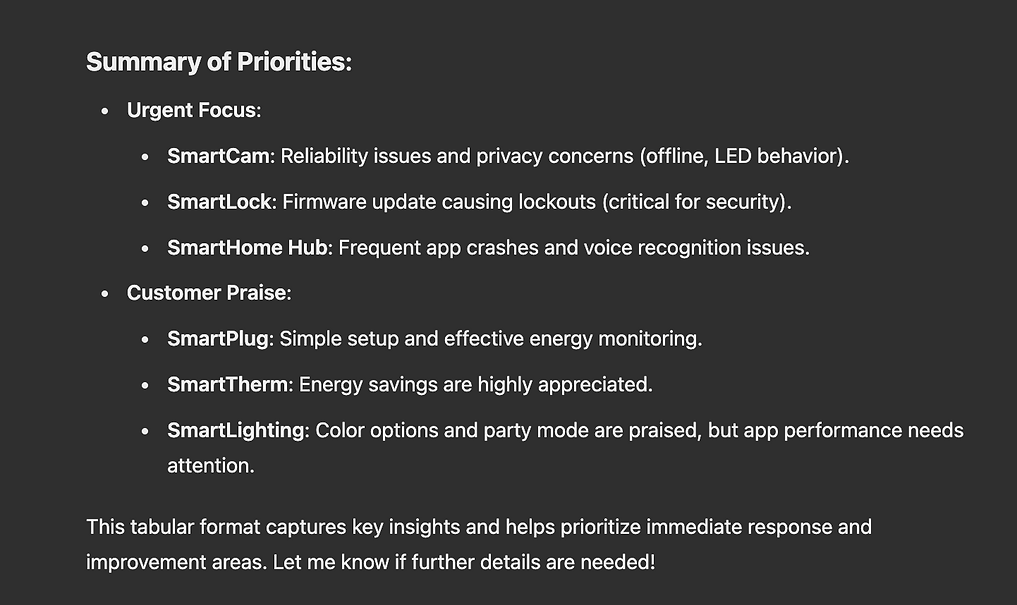
This gives Marcus a great overview of the feedback, arranged by issue and product. He also has the most critical items prioritized.
Step 4: Action Plan Development
Marcus's Prompt:
- A prioritized list of actions needed
- Suggested timeline (24h, 72h, 1 week)
- Required team involvement
- Success metrics
Focus only on issues that:
- Impact customer security/safety
- Cause service disruption
- Show high churn risk
AI Response:
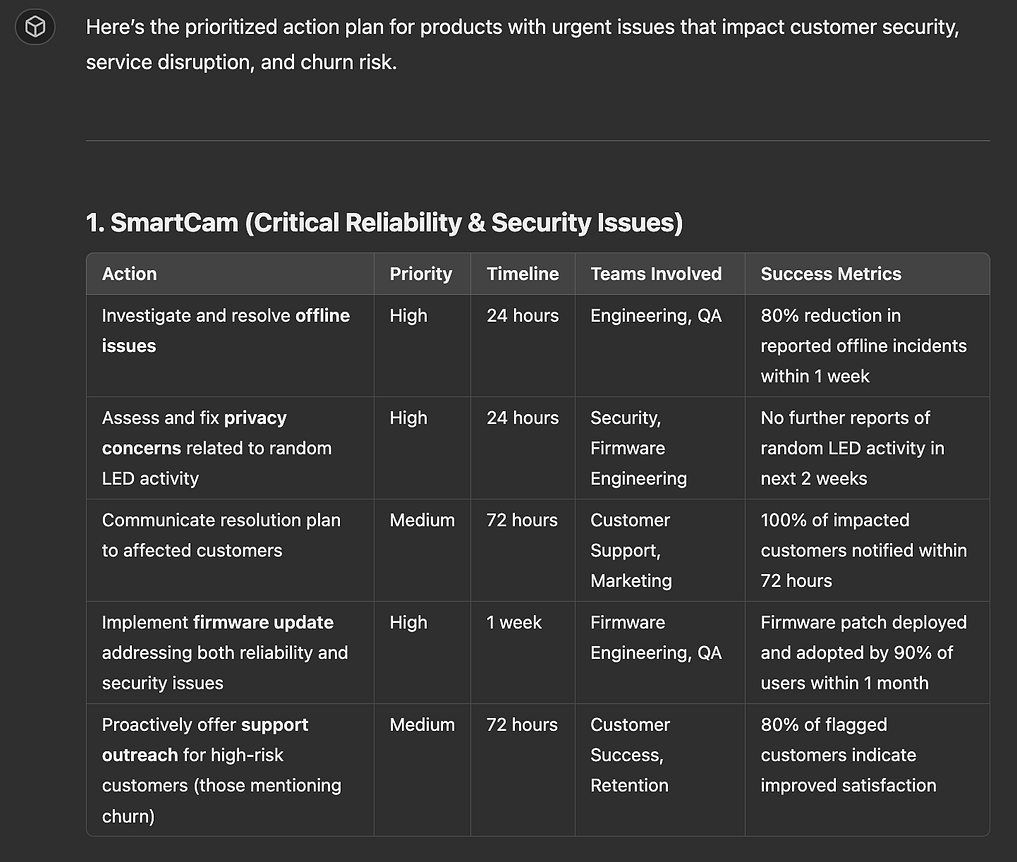
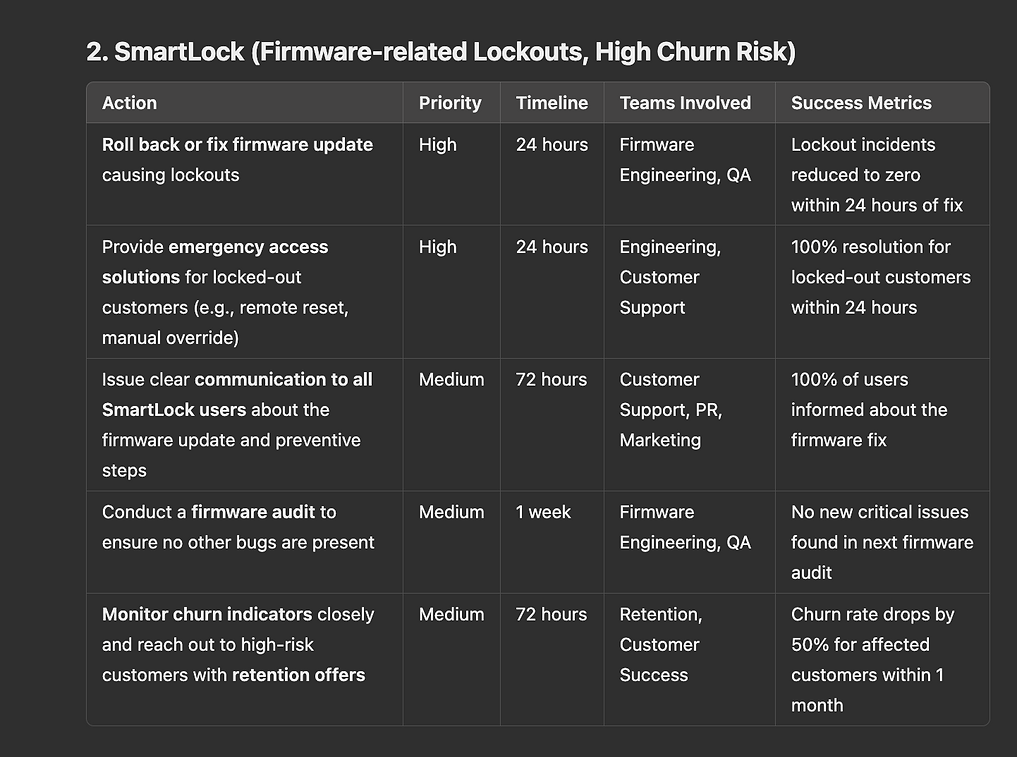
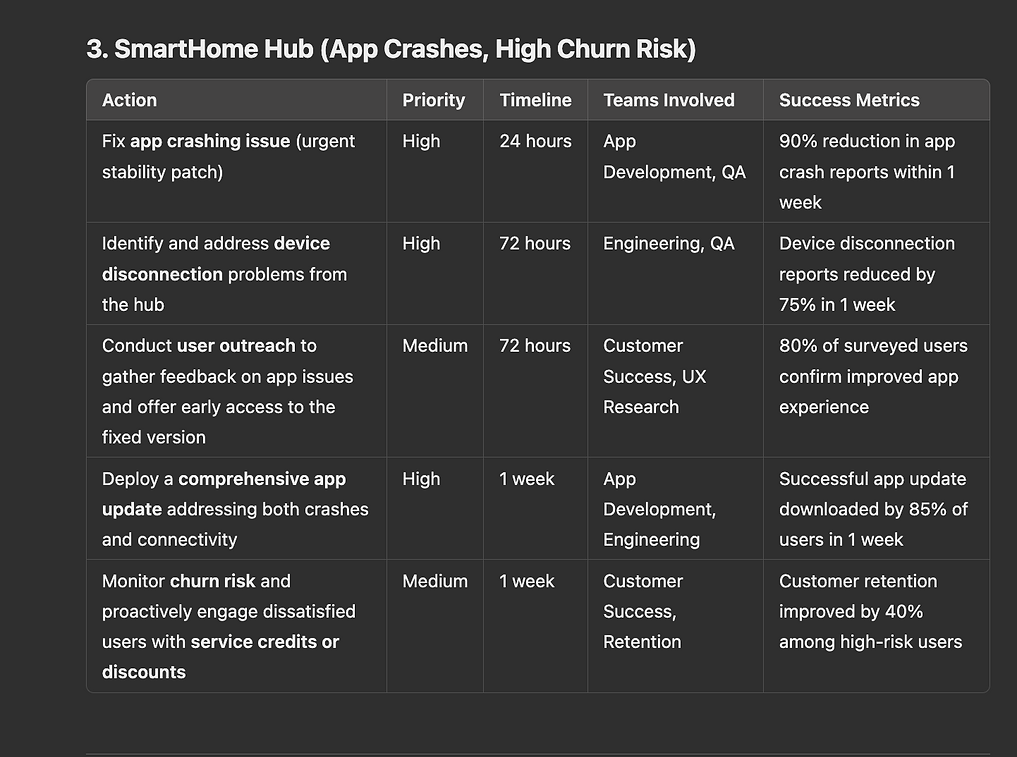
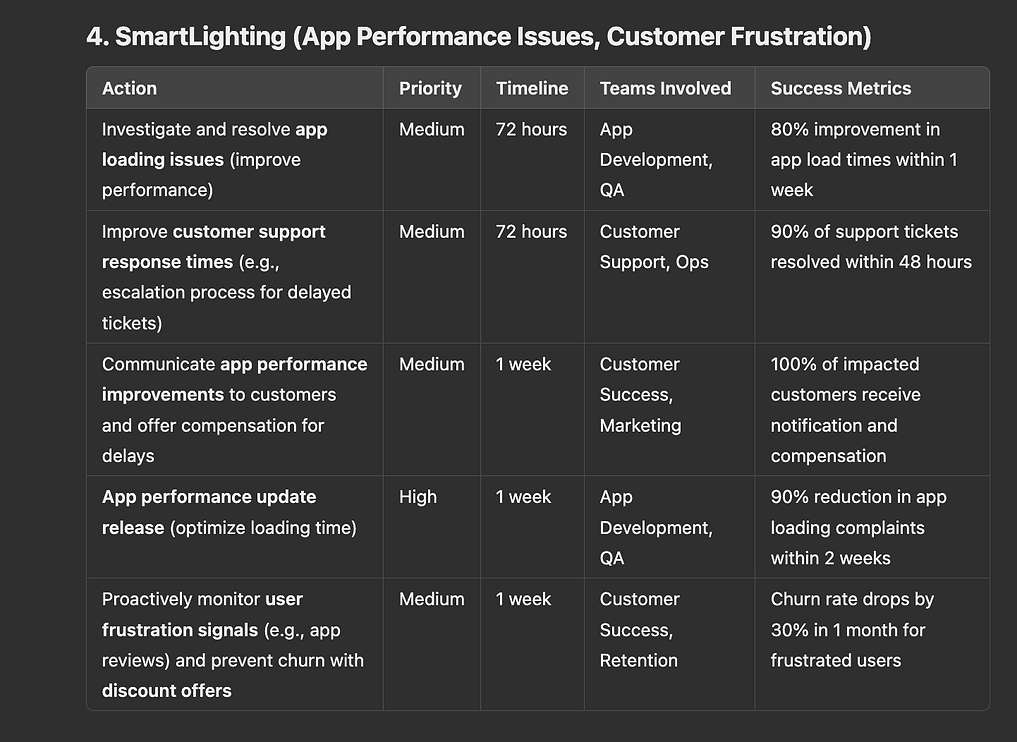
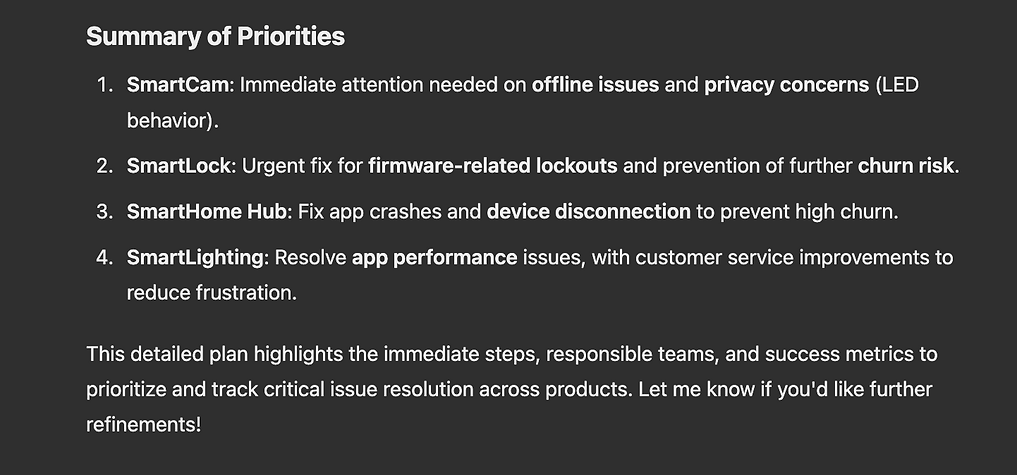
In a short view prompts, Marcus now has a prioritized list of the most critical issues affecting customer experience and churn. Now he can engage the appropriate teams within the organization to tackle these issues.
Pro Tips
- Frame your AI prompts to analyze multiple dimensions - requesting only "positive/negative" analysis misses crucial context about feature requests, security concerns, and regional patterns
- Start broad, then narrow - first ask AI to classify general sentiment patterns, then drill down into specific issues or products showing concerning trends
- Use consistent data formats when presenting feedback to AI - our structured approach with date, channel, region, and feedback made pattern recognition more accurate
- Ask AI to justify its sentiment classifications - helps validate if the analysis aligns with your business context and customer impact understanding
Considerations
- AI may miss cultural nuances in feedback - always review regional sentiment analysis with local market knowledge
- Some urgency indicators (like "immediately" or "asap") may be customer speaking style rather than true urgency - calibrate AI's priority assessment
- AI might over-emphasize recent feedback - ensure your prompts account for historical patterns and trends
- Not all negative sentiment needs action - train AI to distinguish between constructive criticism and critical issues
Knowledge Check
1 / 5What is the primary problem AI-powered sentiment analysis aims to solve for businesses dealing with customer feedback?