Boost your resume and job search with AI
Looking for a new job takes time and energy - especially when it comes to getting your resume right. You're not just writing for human readers anymore; most companies use applicant tracking systems (ATS) to screen applications before they ever reach a recruiter's desk. This guide explores how AI tools can help with both challenges.
We'll look at practical ways to use AI for fine-tuning your resume, finding relevant positions and creating outreach communications. These aren't magical solutions - they're simply tools that can help you be more efficient in your job search and make sure your experience is presented clearly to both automated systems and human readers.
Real-World Scenario
Meet Sarah Kim, a 32-year-old marketing manager at BrightLine Consumer Goods. Over eight years, she's built a strong track record in traditional marketing, leading successful campaigns for retail brands. While she enjoys marketing, she's eager to transition into the tech industry, where she can work on digital products and innovative marketing strategies. Despite her solid experience, Sarah's unsure how to position herself for tech roles and make her traditional marketing background relevant to tech companies.
Let's follow Sarah's journey as she uses AI to transform her career path.
Step 1: Initial Career Direction Exploration
Why It's Important: Before diving into resume optimization, you need a clear understanding of your target roles and their requirements. This foundation will guide all subsequent steps in your transition.
How to Do It: Start a conversation with AI about your background and aspirations, asking for specific guidance about potential roles and their requirements.
Sarah's Prompt:
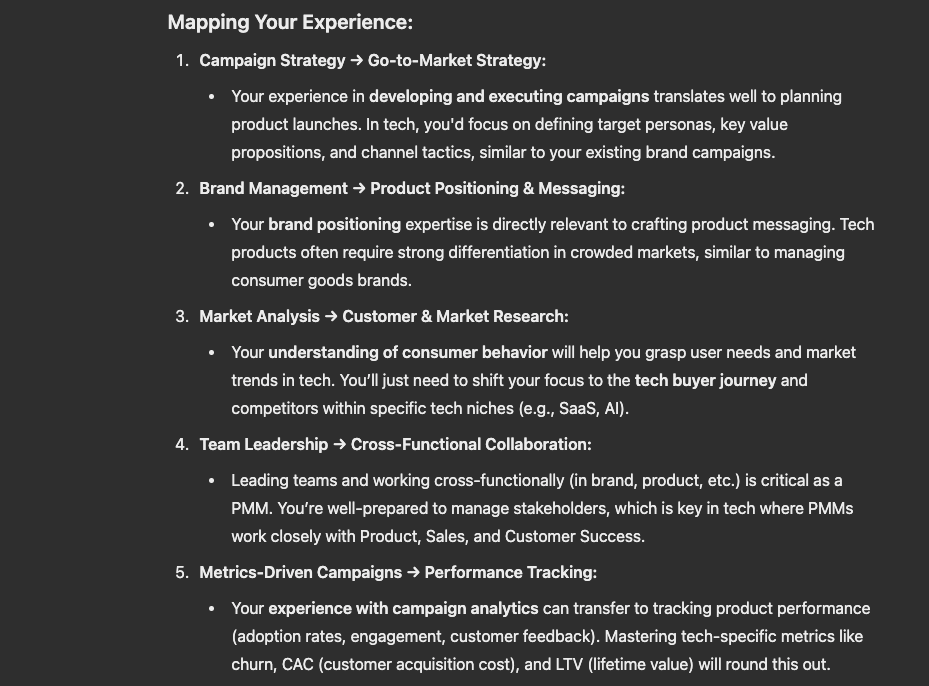
AI Response:
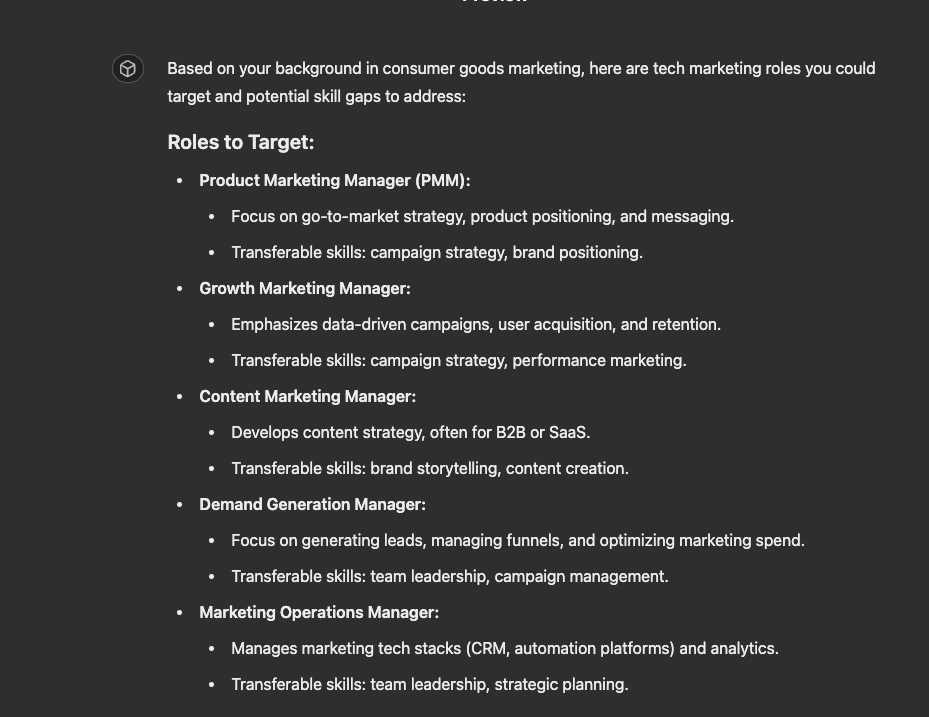
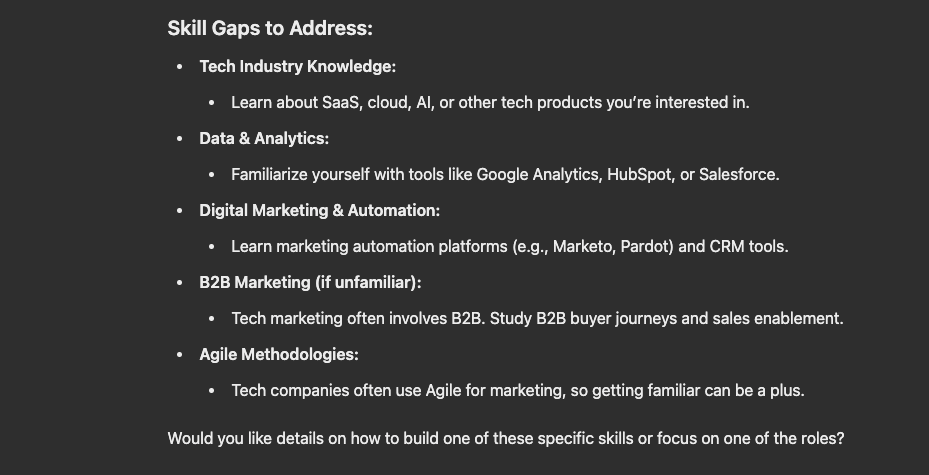
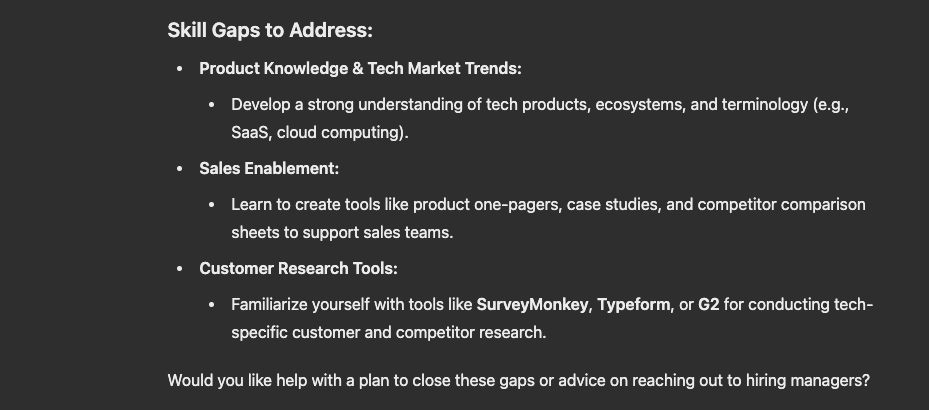
AI helps you aid your search by suggesting relevant roles based on your background and interests, which will guide your resume optimization and job search.
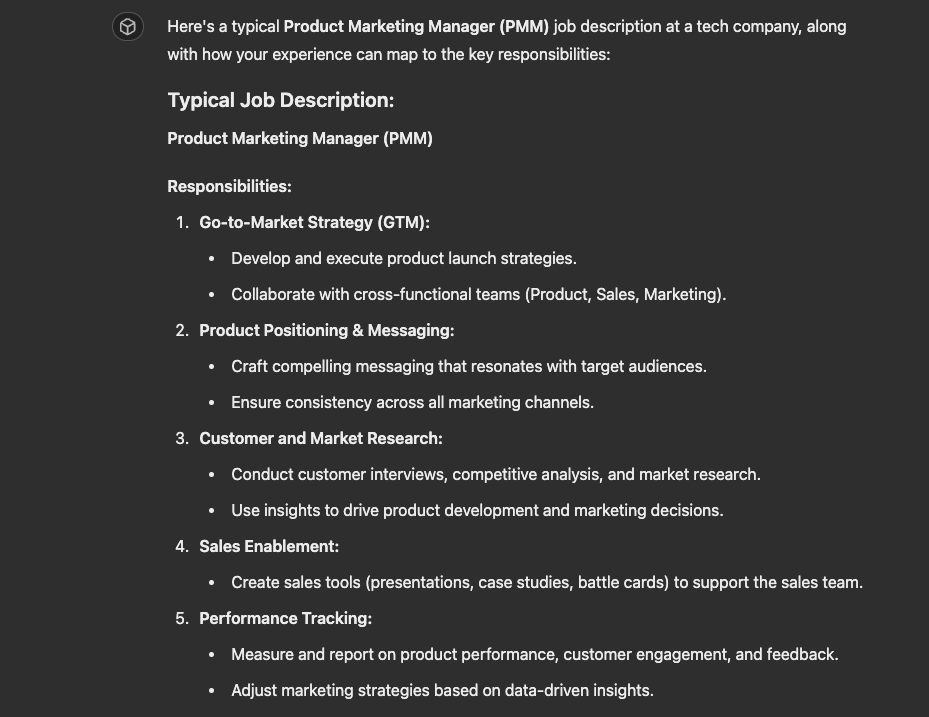
Sarah's Follow-up Prompt :
AI Response:
Step 2: Resume Analysis and Transformation
Why It's Important: With a clear understanding of the target role, you need to reshape your resume to speak directly to tech industry requirements while highlighting transferable skills.
How to Do It: Share your current resume with AI and ask for specific guidance on transforming it for tech industry roles.
Sarah's prompt:
AI Response:
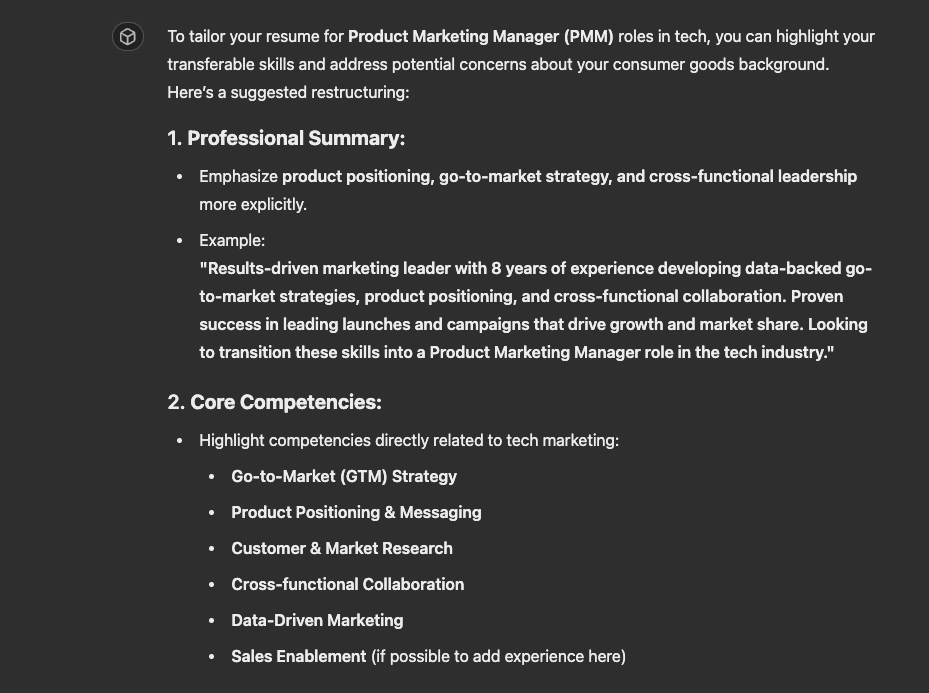
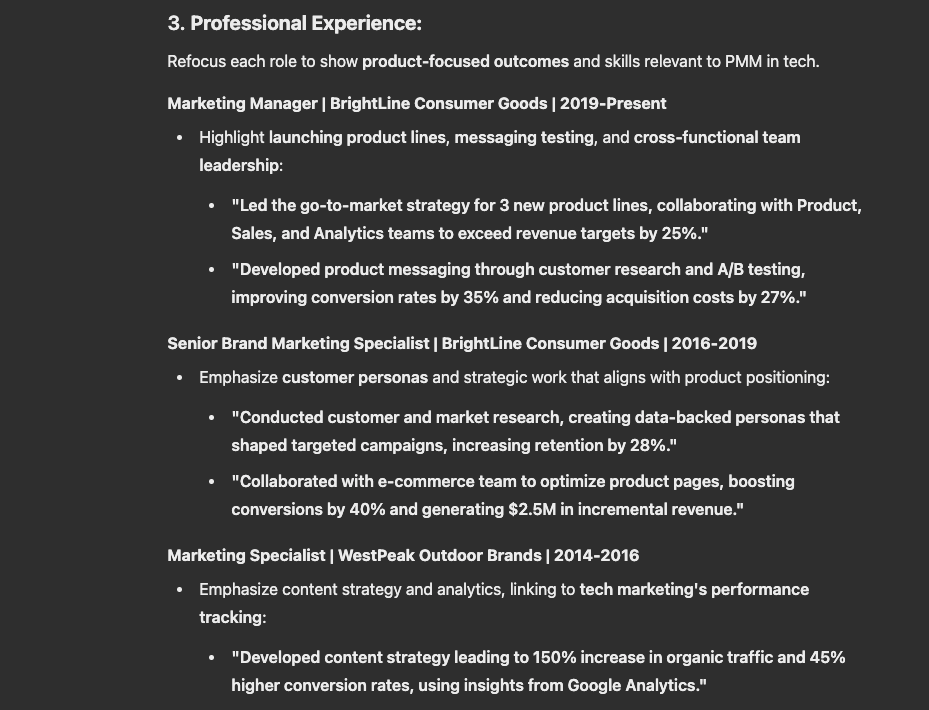
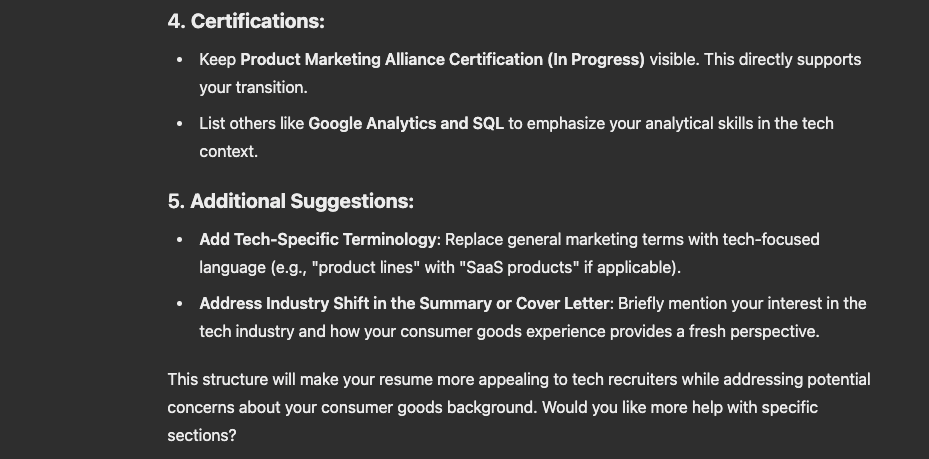
The AI identifies industry-specific terms and accomplishments that should be emphasized to align with job requirements in the tech industry.
Step 3: ATS Optimization and Job Requirements Alignment
Why It's Important: Even the best-crafted resume needs to pass through Applicant Tracking Systems (ATS) to reach human recruiters. Tech companies, in particular, heavily rely on these systems to screen candidates. Additionally, each company might have specific requirements and terminology that need to be reflected in your application.
How to Do It: Use AI to analyze specific job postings, compare them against your resume, and make strategic adjustments while maintaining authenticity.
Sarah's prompt:
Product Marketing Manager, Marketing Cloud
Salesforce | San Francisco, CA (Remote Optional)
Key Responsibilities:
- Drive go-to-market strategy for Marketing Cloud products
- Create compelling product narratives and sales enablement materials
- Lead cross-functional initiatives with Product, Sales, and Customer Success
- Analyze market trends and competitive landscape
- Define product positioning and messaging
Requirements:
- 5+ years of marketing experience
- Proven track record in launching products/solutions
- Experience with marketing automation platforms
- Strong analytical and communication skills
- MBA preferred
Can you analyze this job description against my current resume [previous artifact] and suggest specific changes to optimize for their ATS while highlighting my most relevant experience?
AI Response:
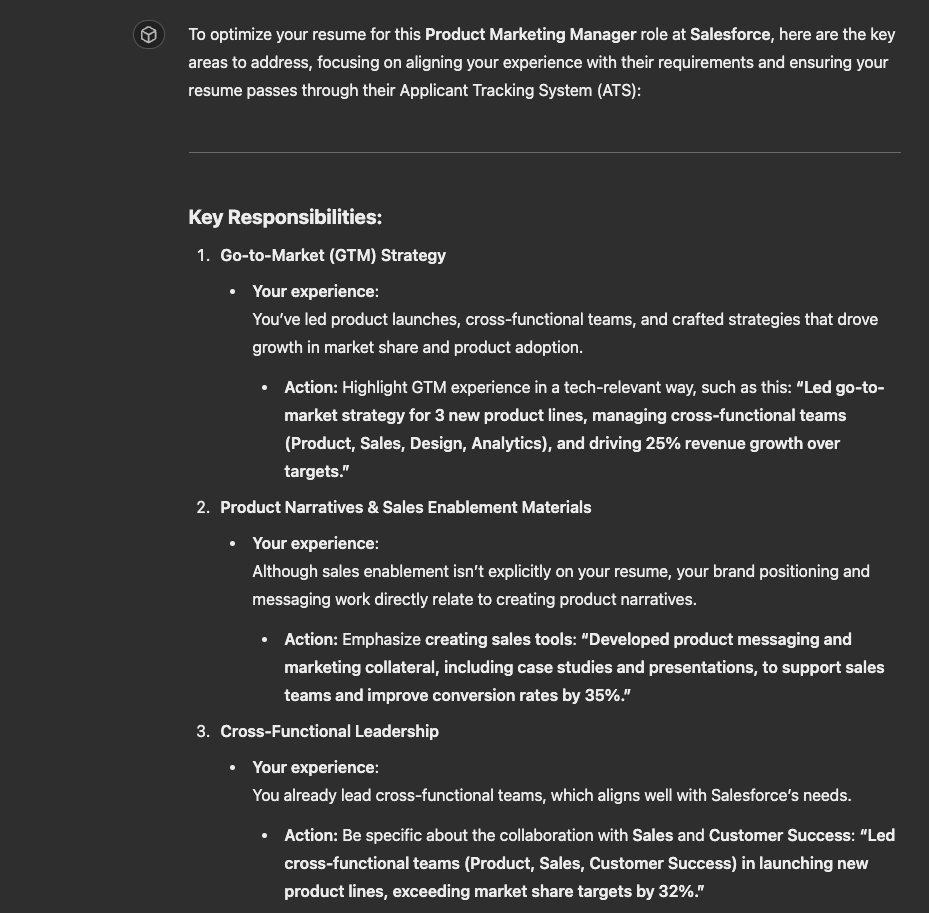
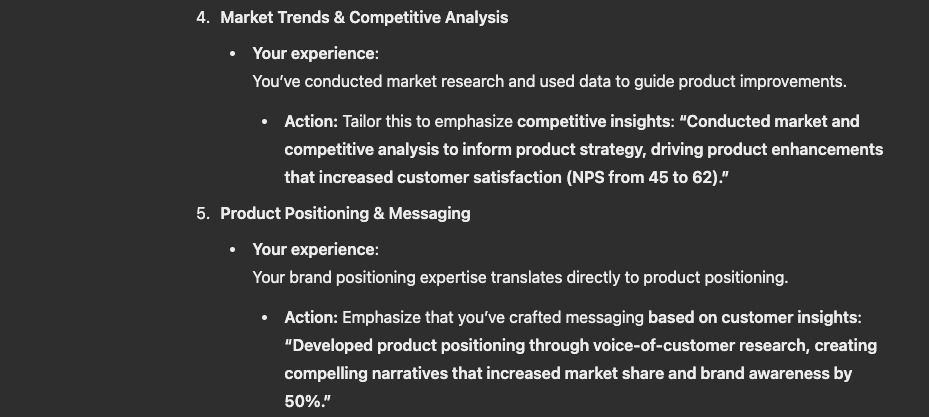
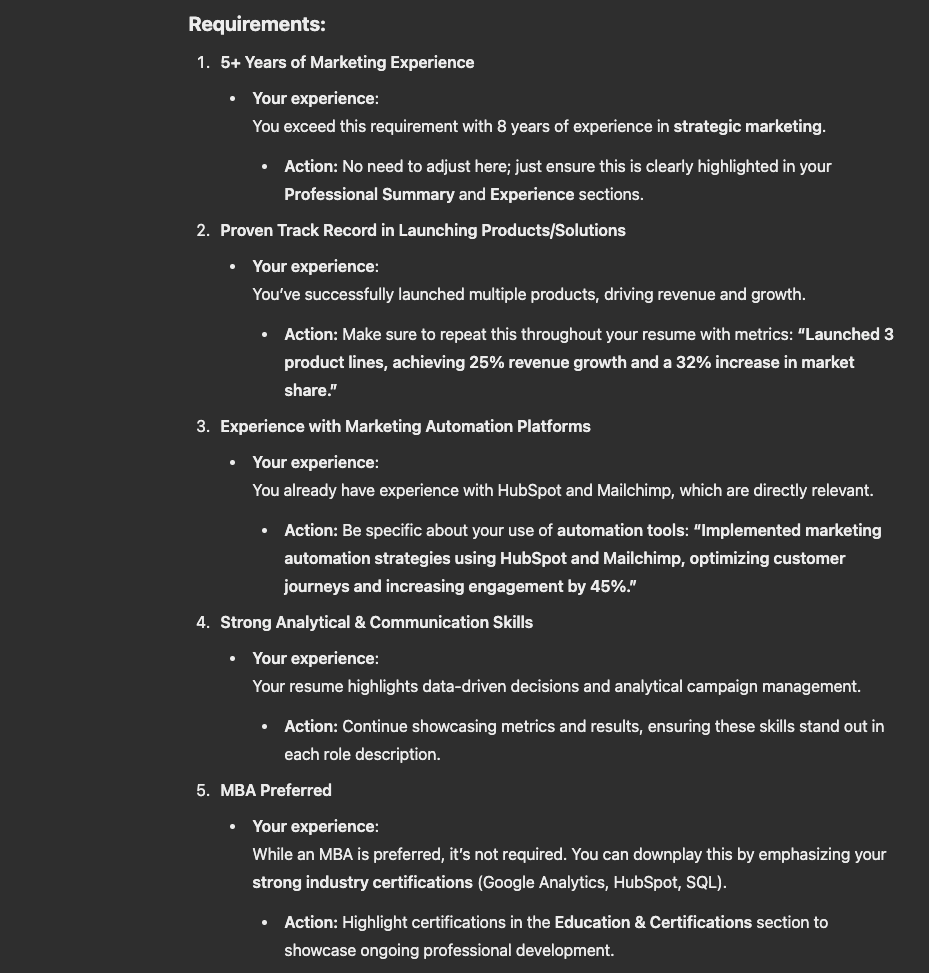
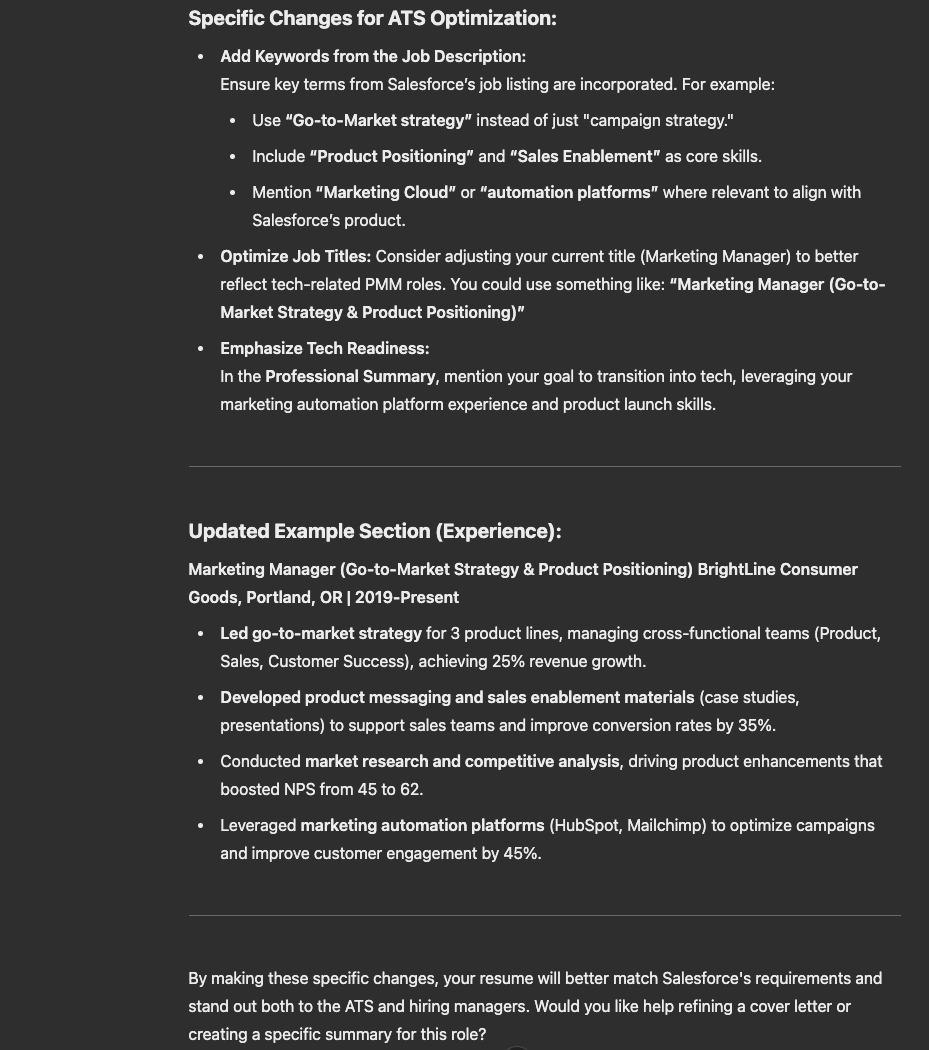
AI helps identify which of your skills will map to specific job post and suggests changes to help pass ATS screenings.
Step 4: Strategic Job Search and Networking
Why It's Important: With an optimized resume that effectively communicates tech-relevant experience, Sarah needs a strategic approach to identify and pursue the right opportunities. This involves both finding companies that match her aspirations and effectively networking her way into them.
How to Do It: Leverage AI to develop a targeted company list and create personalized networking strategies based on your unique transition story.
Sarah's prompt:
For context, I've already applied to Salesforce and have been researching companies like HubSpot and Adobe. Could you help me expand my target list and suggest how to prioritize them based on my background?
AI Response:
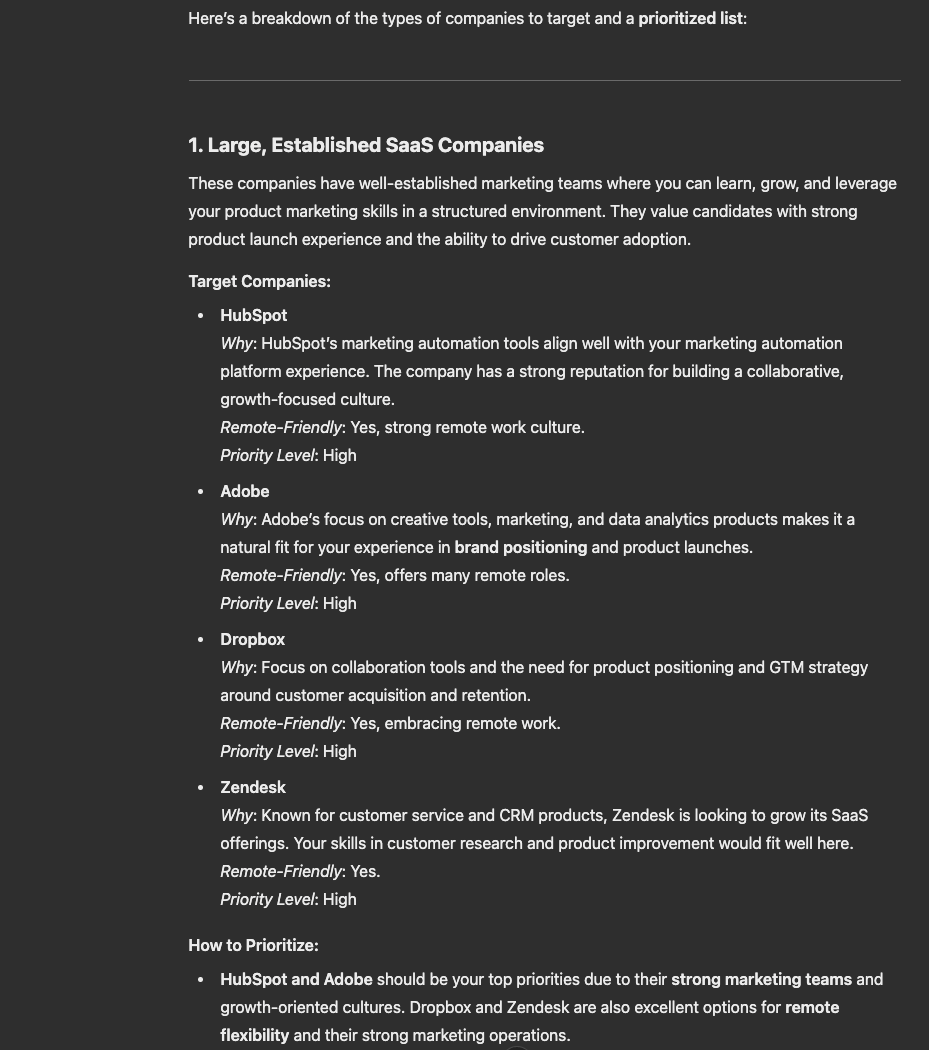
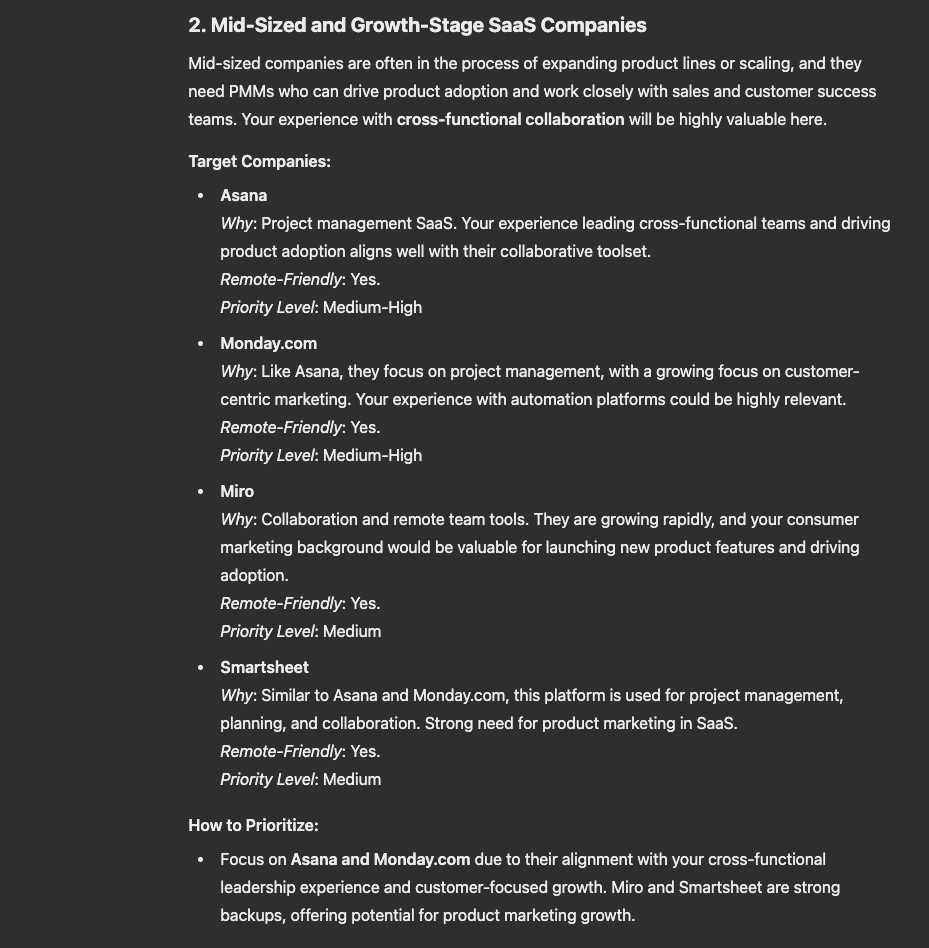
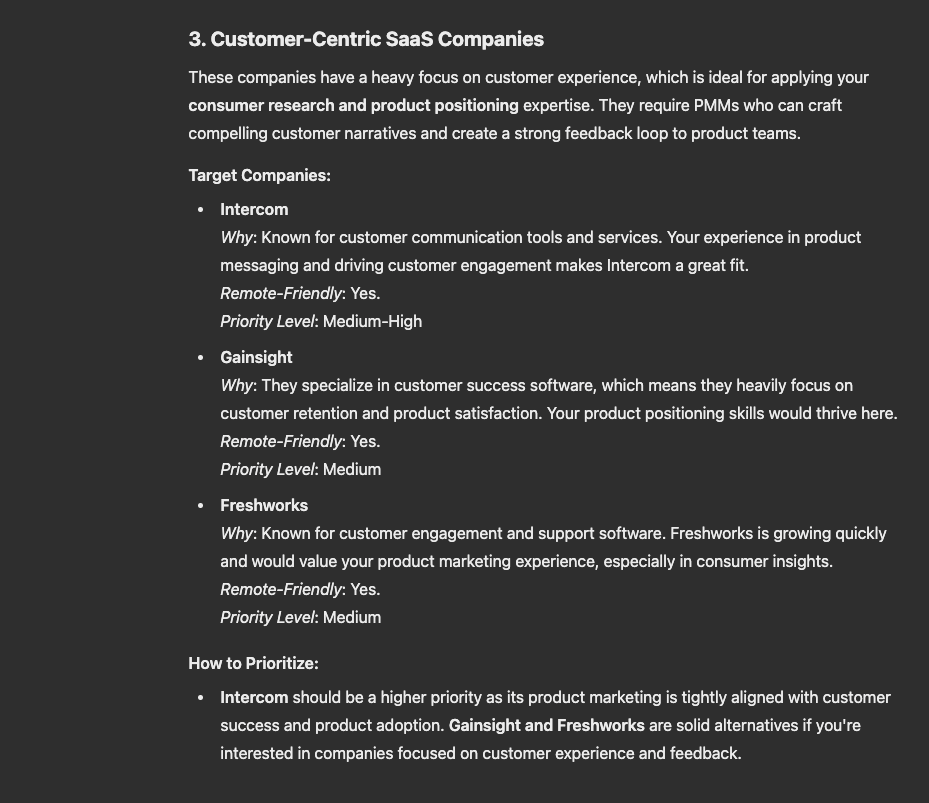
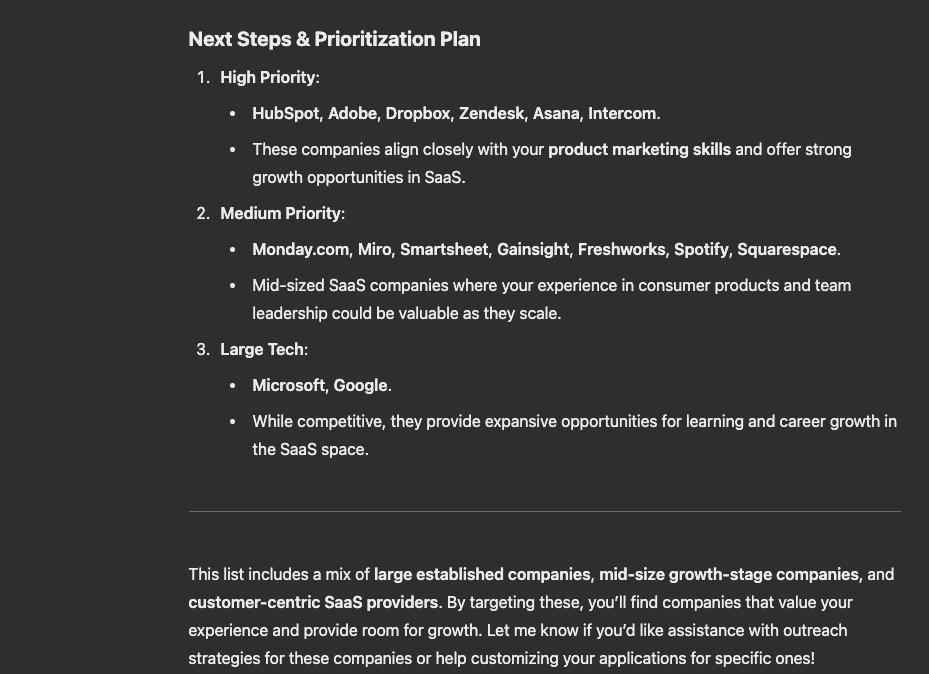
The AI makes suggestions of potential target companies where Sarah's experience might fit well, giving Sarah a list of leads to follow.
Sarah's Follow-up prompt:
AI Response:
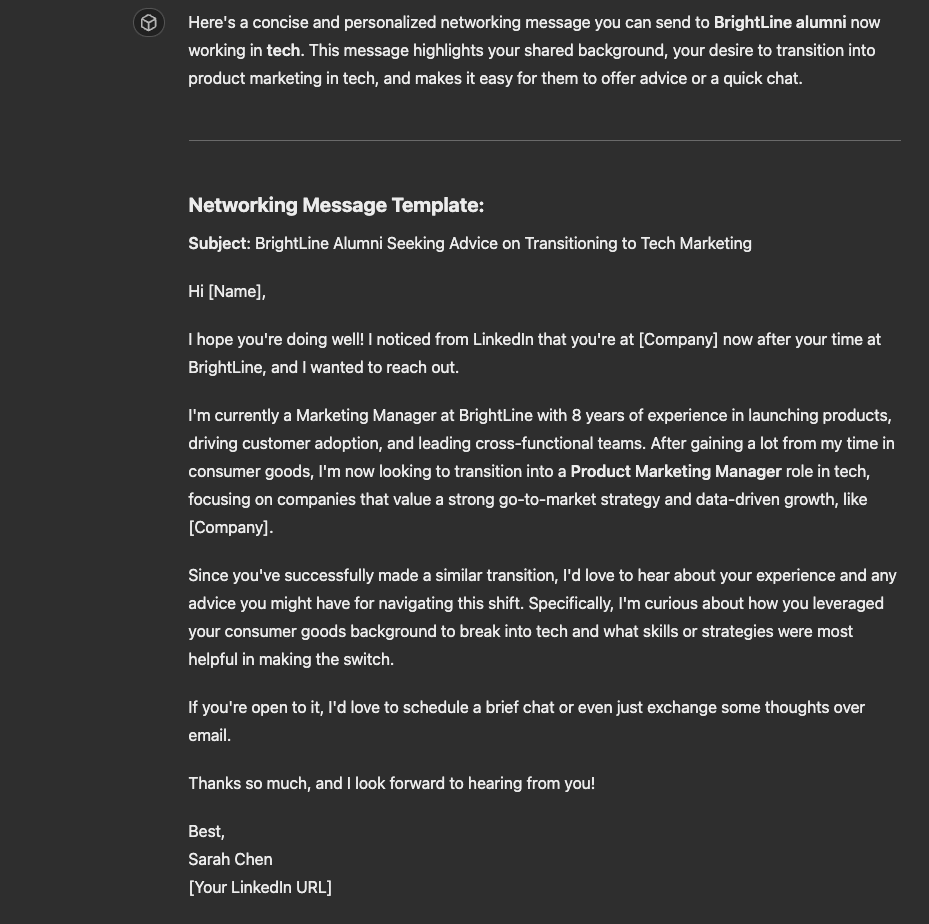
The AI drafts an email to help Sarah reach out to alumni in the target companies. This equips her with an outreach to move her job search further
Pro Tips
- Use follow-up prompts with AI to challenge and refine suggestions - "What potential concerns might recruiters have about this experience?" or "How can I strengthen this achievement metric further?"
- Save successful AI prompts and responses in a document - when you get particularly helpful resume feedback or job search advice, keep those prompts for future use
- Compare AI responses across multiple interactions to identify consistent patterns and recommendations for your industry transition
Considerations
- Always fact-check AI-suggested metrics and achievements against your actual experience - never include inflated or inaccurate claims
- Maintain your authentic voice and story while incorporating AI suggestions for industry-specific language
- Remember that AI should complement, not replace, real networking and relationship building in your target industry
- Get AI-optimized resume content reviewed by industry professionals or colleagues, whenever possible to validate its effectiveness
- Be prepared to continuously iterate your materials as you learn more about your target industry through networking conversations
Wrapping Up
Your journey to transition industries, like Sarah's move from consumer goods to tech, requires both strategy and persistence. AI can be a powerful tool in this process, helping you optimize your materials and focus your search, but success comes from applying these insights thoughtfully and authentically.
The key to effectively using AI in your job search is maintaining a balance: let AI enhance your story, not replace it. Whether you're optimizing your resume, crafting networking messages, or identifying target companies, use AI as a strategic thought partner that helps you translate your experience into your desired industry's language.
Stay curious, be authentic, and let AI amplify your unique professional story. Your thoughtful approach to using AI in your job search will help you stand out as a candidate who bridges industries effectively, just as Sarah did in her transition to tech.
Knowledge Check
1 / 5What is the primary benefit of using AI tools in your job search, according to the guide?