Ideating effectively with AI
Ideation is a crucial part of problem-solving and innovation, but it can sometimes feel like you're spinning your wheels. AI-assisted brainstorming combines human creativity with artificial intelligence, helping you generate more diverse and innovative ideas. This guide will show you how to leverage AI to supercharge your ideation sessions, whether you're working solo or with a team.
In this guide, you will learn:
- How to structure your ideation sessions with AI to get more focused, innovative results
- A proven 5-step process for effective AI-assisted brainstorming
- Practical techniques for expanding, critiquing, and refining ideas with AI
- How to balance AI suggestions with human expertise and industry knowledge
- Real-world application through a product development scenario
- Time-saving tips to avoid common ideation pitfalls
Real-World Scenario
Meet Alex, a product manager at a mid-sized fitness equipment company. Alex's team has been tasked with developing a new home workout product line to capitalize on the growing trend of at-home fitness. With fierce competition in the market, they need fresh, innovative ideas that will set their products apart. Alex decides to use AI to enhance their brainstorming process and ensure they're not missing any potential opportunities.
Before we dive into the process with Alex, here is a visual overview of the AI-assisted ideation process.
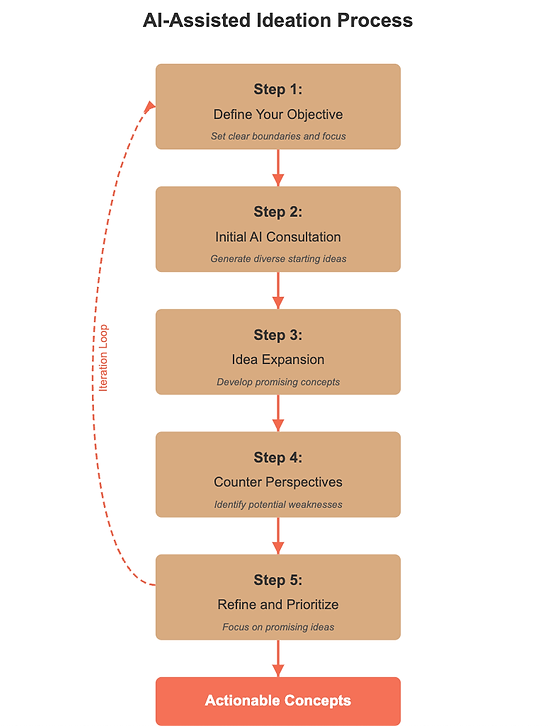
Step 1: Define Your Objective/Challenge
Alex's prompt:
AI response:

Alex finds this challenge statement helpful as it pinpoints their target market and key product features.
Step 2: Initial AI Consultation
Alex's prompt:
AI response:
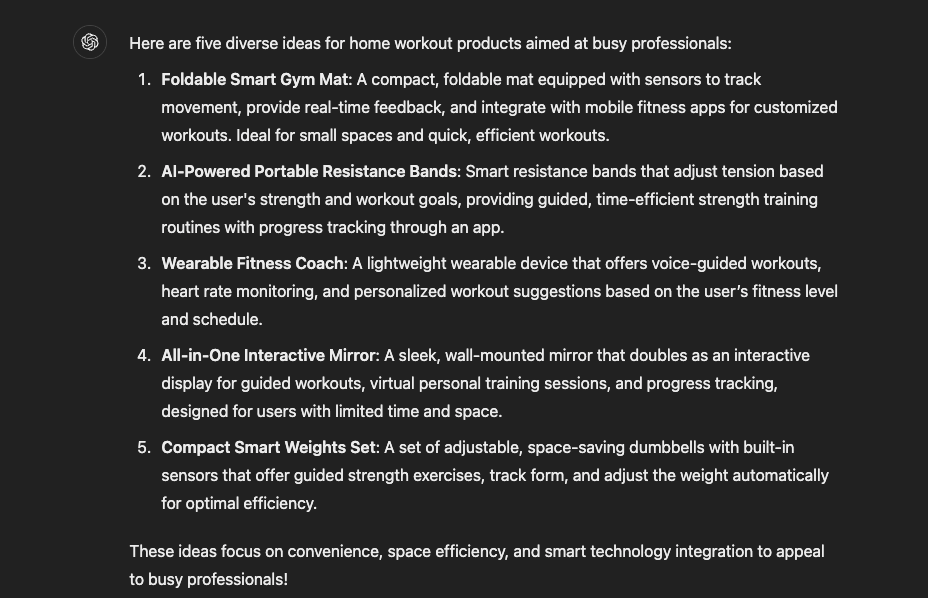
Alex is intrigued by several of these ideas, particularly the space-saving and time-efficient options that align well with their target market's needs.
Step 3: Idea Expansion
Alex's prompt:
AI response:
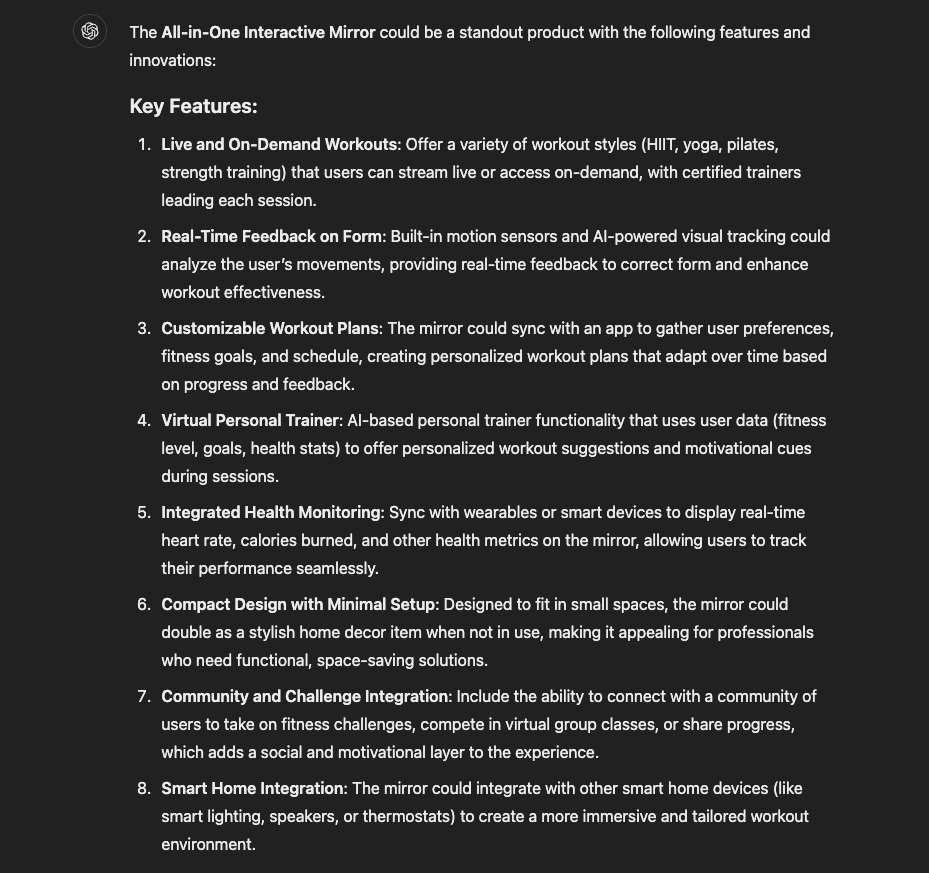
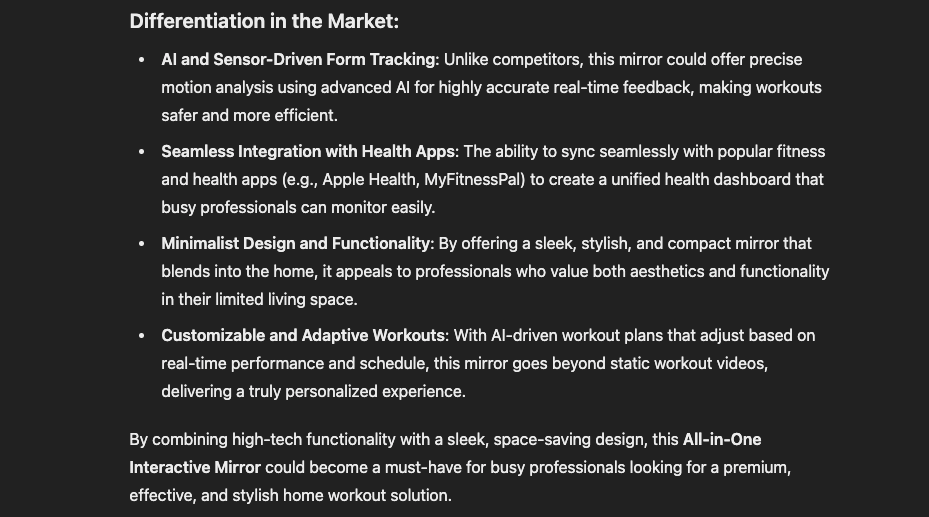
Alex appreciates this detailed breakdown, seeing how it addresses their target market's need for time-efficient, space-saving workouts with personalized guidance.
Step 4: Consider Counter Perspectives
Alex's prompt:
AI response:
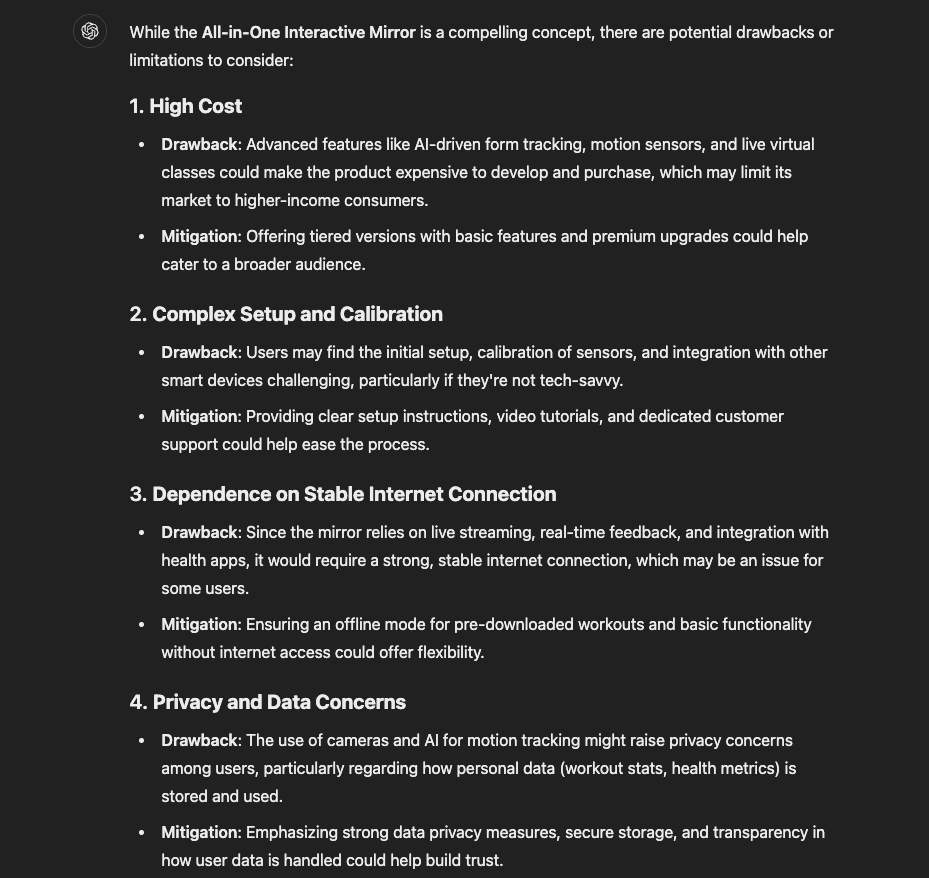
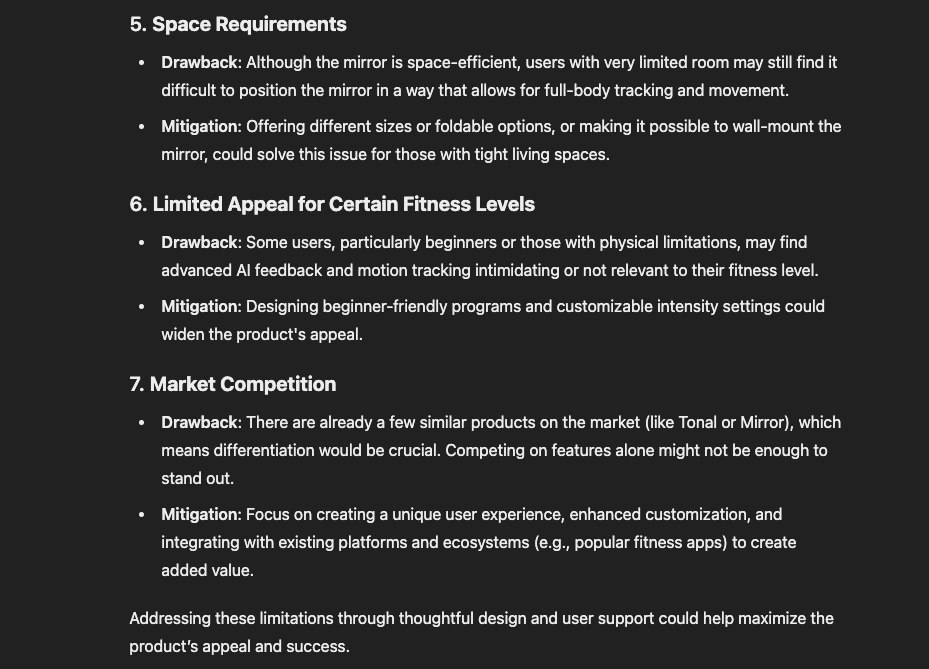
Alex appreciates this balanced perspective, realizing they need to address these potential issues in their product development process.
Step 5: Refine and Prioritize
Alex's prompt:
AI response:
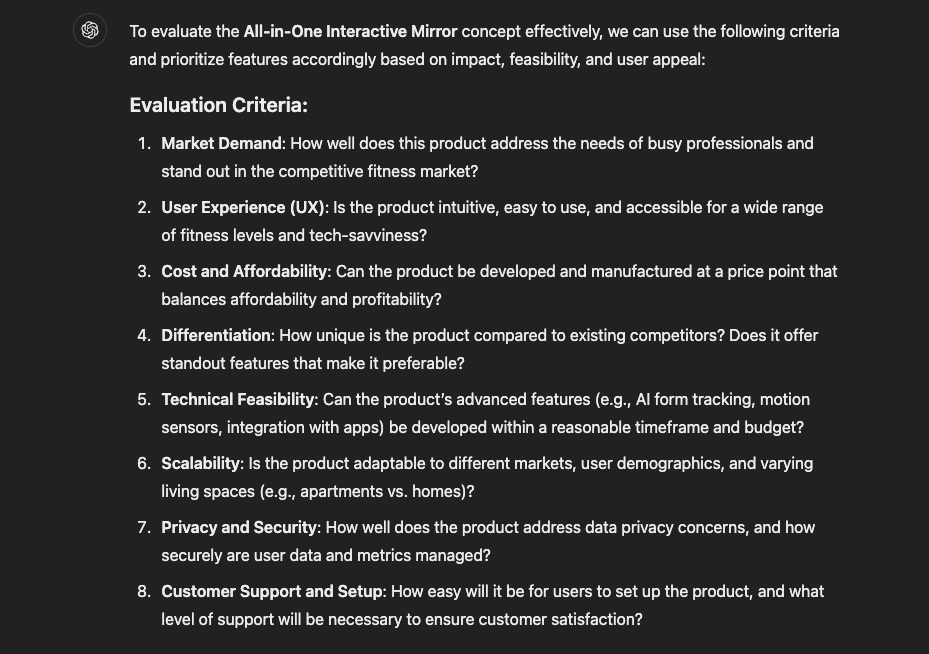
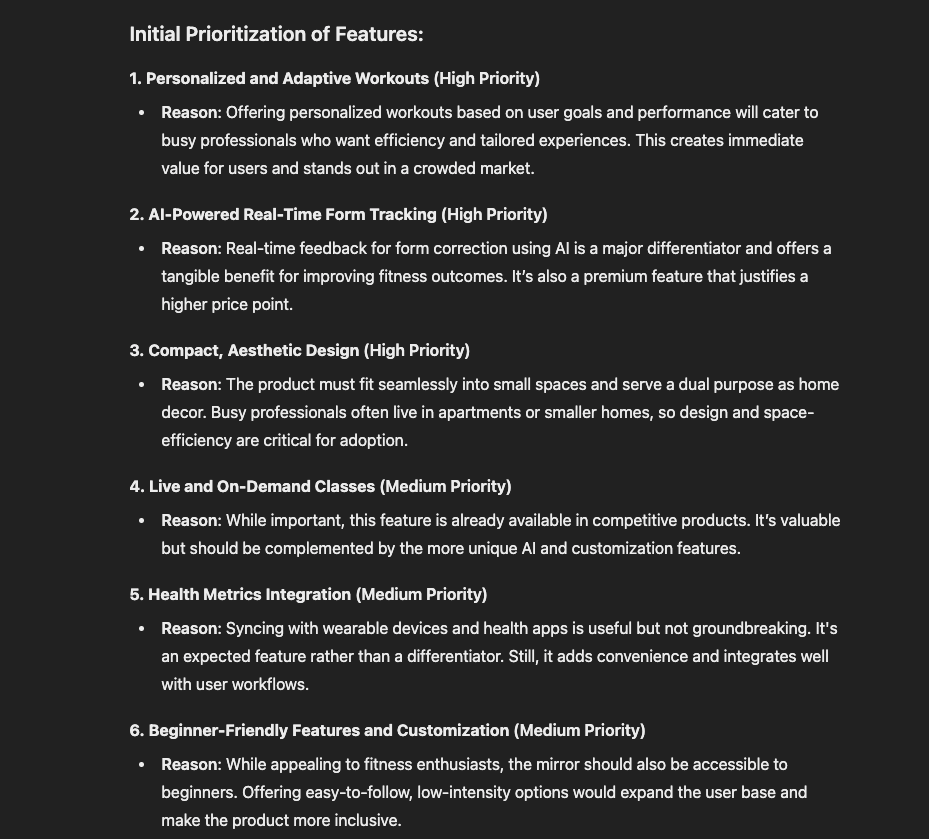
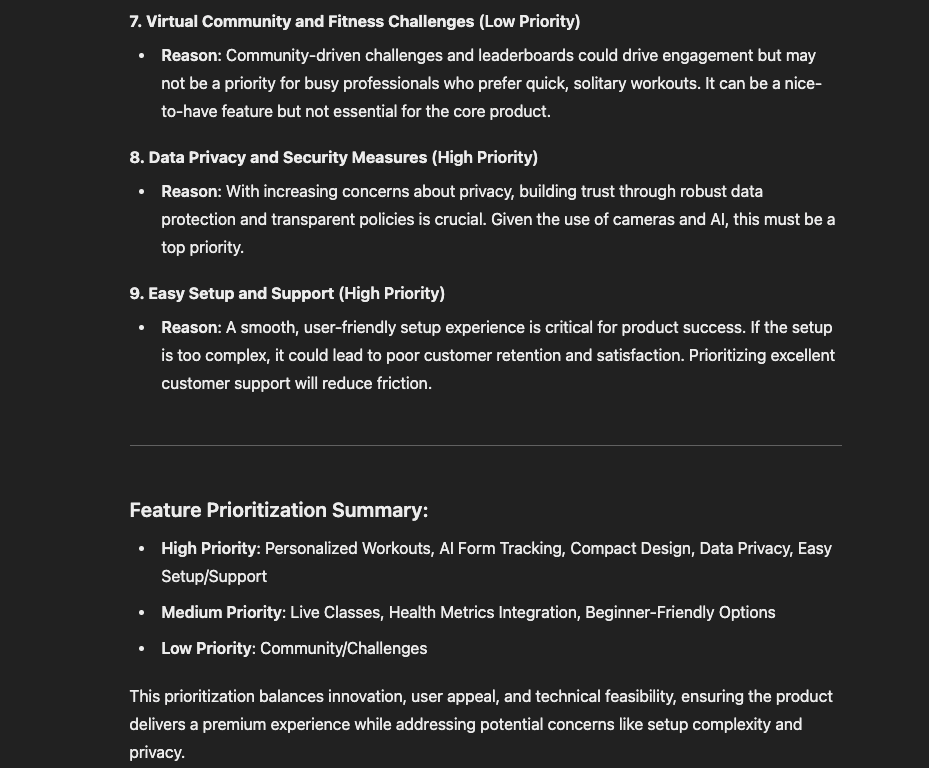
Alex uses this evaluation framework to guide their team's next steps in product development.
Pro Tips
- Be specific in your prompts, providing context and constraints
- Use AI ideas as a starting point, not an end result
- Combine AI suggestions with your industry knowledge and user insights
- Don't hesitate to ask for clarification or more details on AI-generated ideas
- Iterate on ideas by asking follow-up questions and exploring different angles
Considerations
- Always filter AI suggestions through your expertise and user research to avoid over-reliance on AI-generated ideas
- Provide specific constraints and unique aspects of your market in your prompts to prevent generating overly generic ideas
Wrapping Up
AI-assisted brainstorming can significantly enhance your ideation process, helping you generate a wider range of innovative concepts in less time. By following this structured approach, you can leverage AI as a powerful brainstorming partner while maintaining the crucial human elements of creativity and industry insight.
Knowledge Check
1 / 5What is the primary goal of using AI in ideation according to the guide?