Structured Market research with AI
Market research is essential for making informed business decisions. Whether you're launching a product, analyzing trends, or creating content, the ability to conduct structured market research efficiently can be the difference between success and falling behind. AI assistants have transformed this process, helping professionals cut through information overload to find meaningful insights faster than ever.
In this guide, you will learn:
- A systematic 5-step process for conducting effective AI-assisted market research
- How to structure research questions to get more targeted, valuable insights
- Techniques for efficiently gathering high-level market trends and data
- Methods for conducting in-depth competitor analysis with AI
- Strategies for uncovering genuine consumer needs and pain points
- How to synthesize research findings into actionable business recommendations
Real-World Scenario
Meet Alex Rivera, a Product Marketing Manager at FitTech Dynamics, a growing fitness technology company. They're preparing to launch "PulseFlow" - a new fitness wearable that combines activity tracking with wellness insights. With just three weeks until the product launch meeting, Alex needs to gather comprehensive research on market trends, consumer preferences, and competitor products to shape their go-to-market strategy. The challenge? There's an overwhelming amount of information to process, and traditional research methods would take weeks.
Step 1: Define Your Market Research Objective
Alex's prompt:
AI Response:
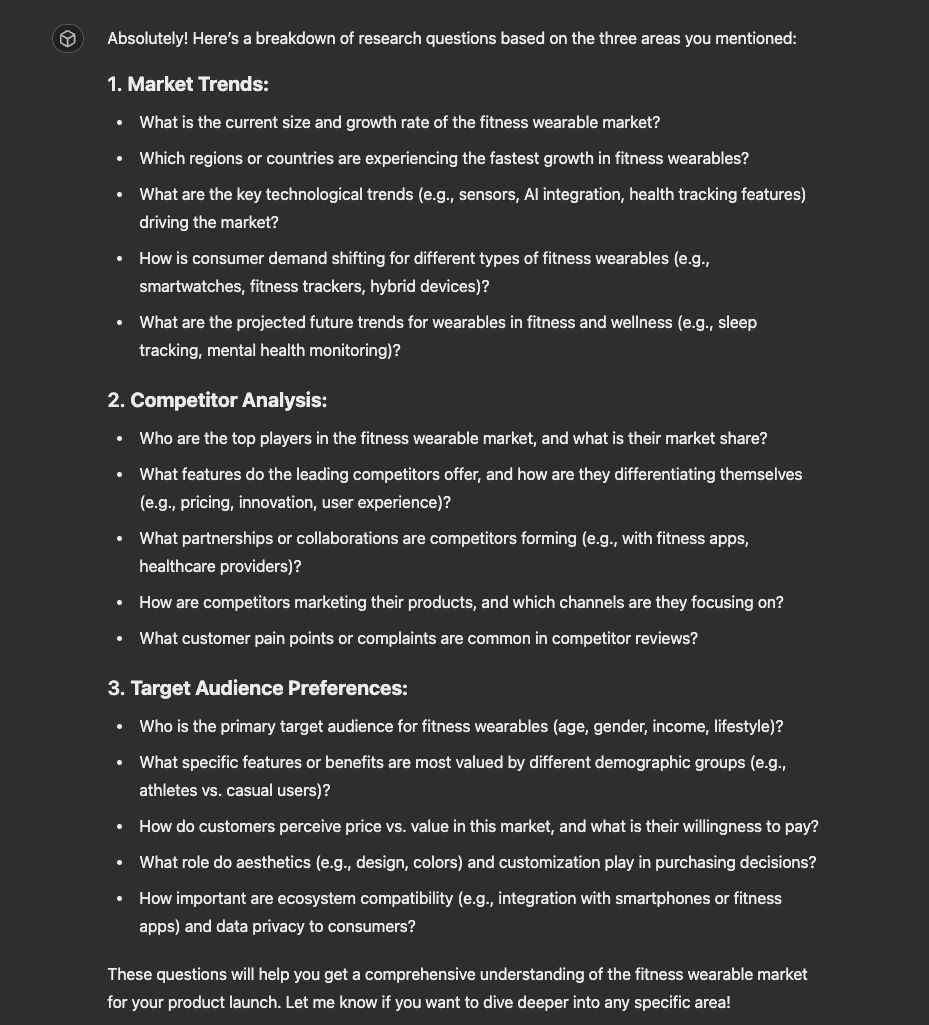
The AI helps you break your broader research goal into smaller, actionable focus areas. This sets a clear roadmap for the rest of your research.
Step 2: Gather High-Level Market Insights
Alex's prompt:
AI Response:
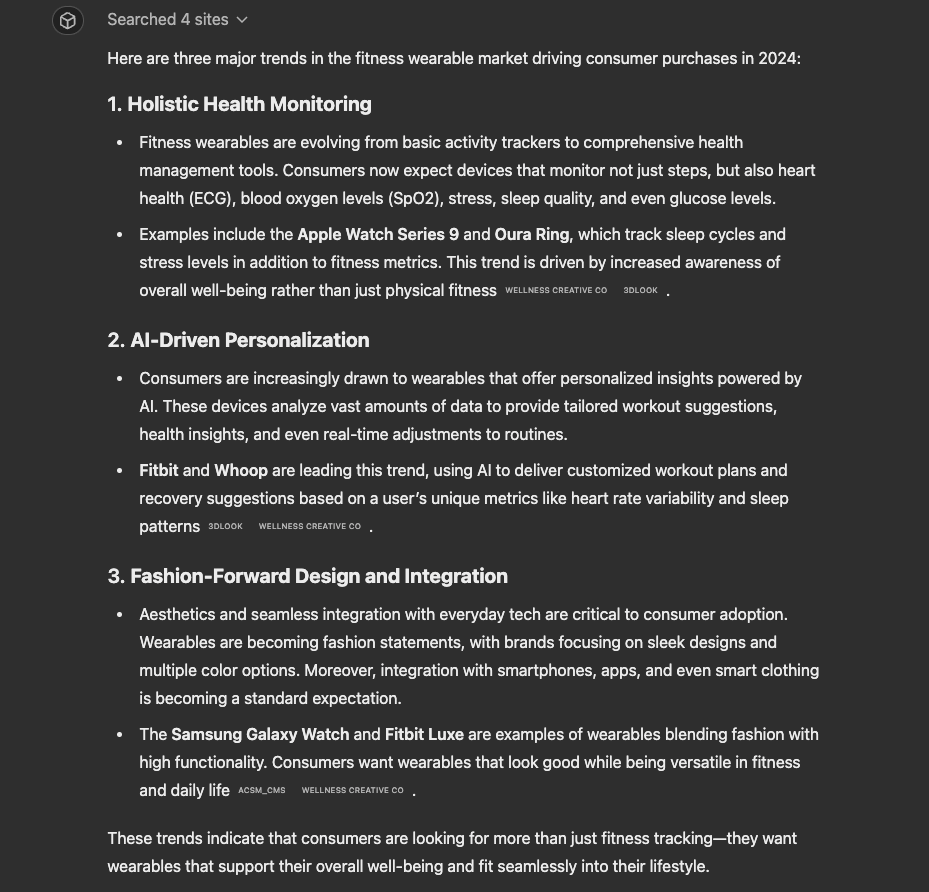
The AI provides a concise snapshot of the latest trends driving revenue, allowing you to focus your efforts on the right features and marketing initiatives.
Step 3: Deep Dive Into Competitor Analysis
Alex's prompt:
AI Response:
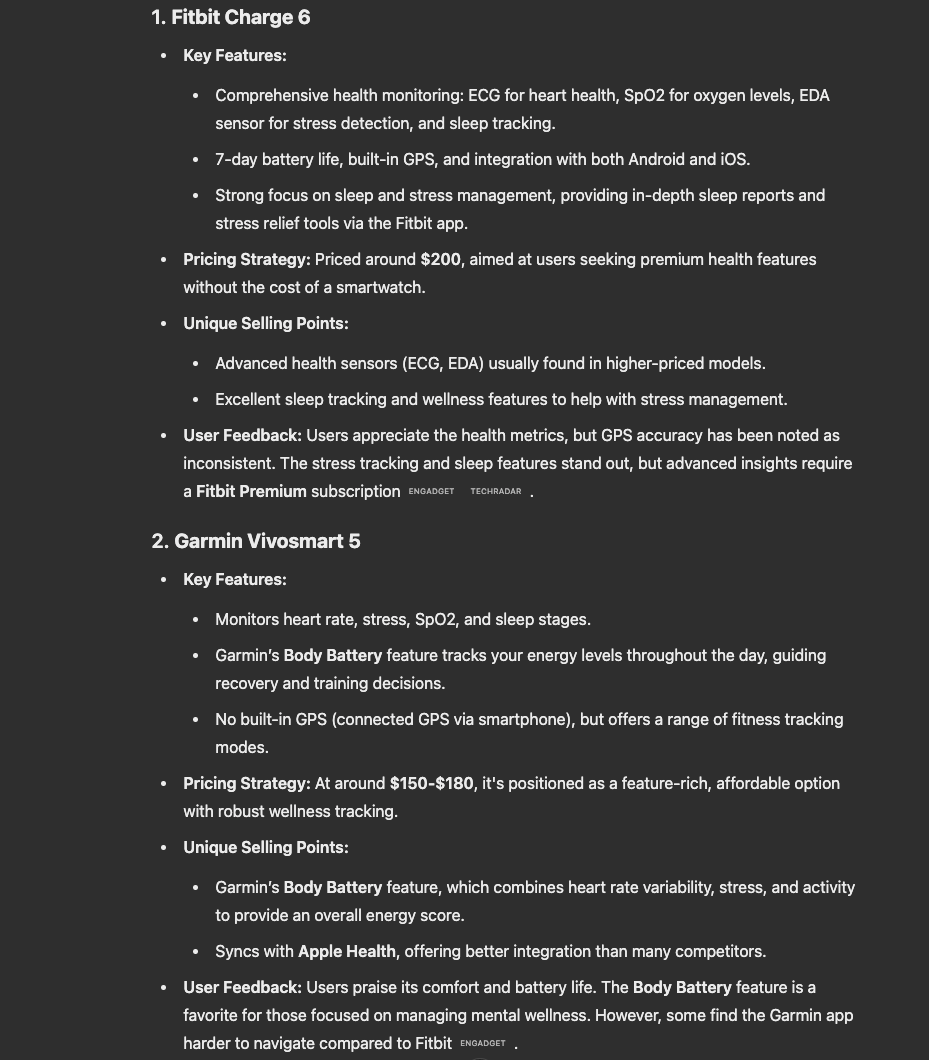
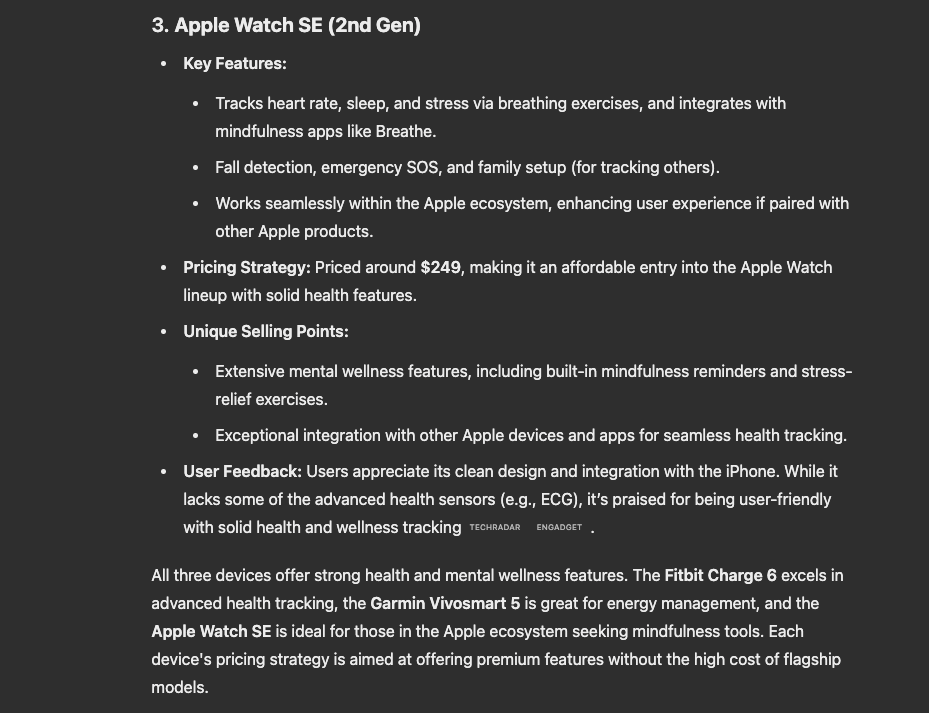
By focusing on specific competitors, the AI efficiently pulls relevant data about their product, saving you time on manual research and helping you benchmark against your own product’s features.
Step 4: Analyze Consumer Insights
After gathering competitor information, Alex wants to understand potential customers' needs and frustrations:
Alex's prompt:
AI Response:
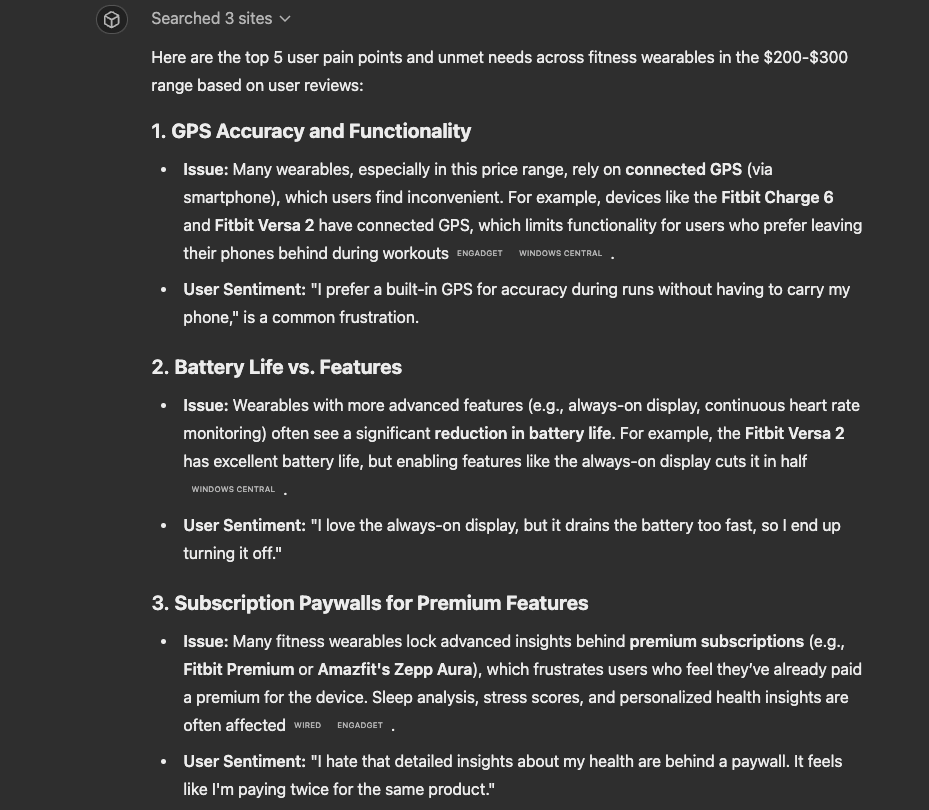
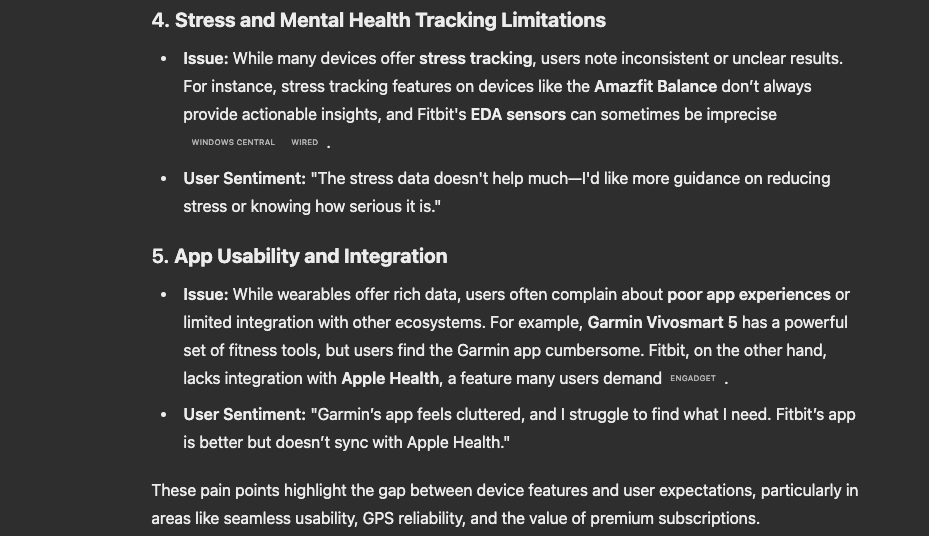
Identifying pain points is critical to feature prioritization and targeted marketing efforts. Alex will use this information to further their product plan.
Alex's Follow-up prompt:
AI Response:
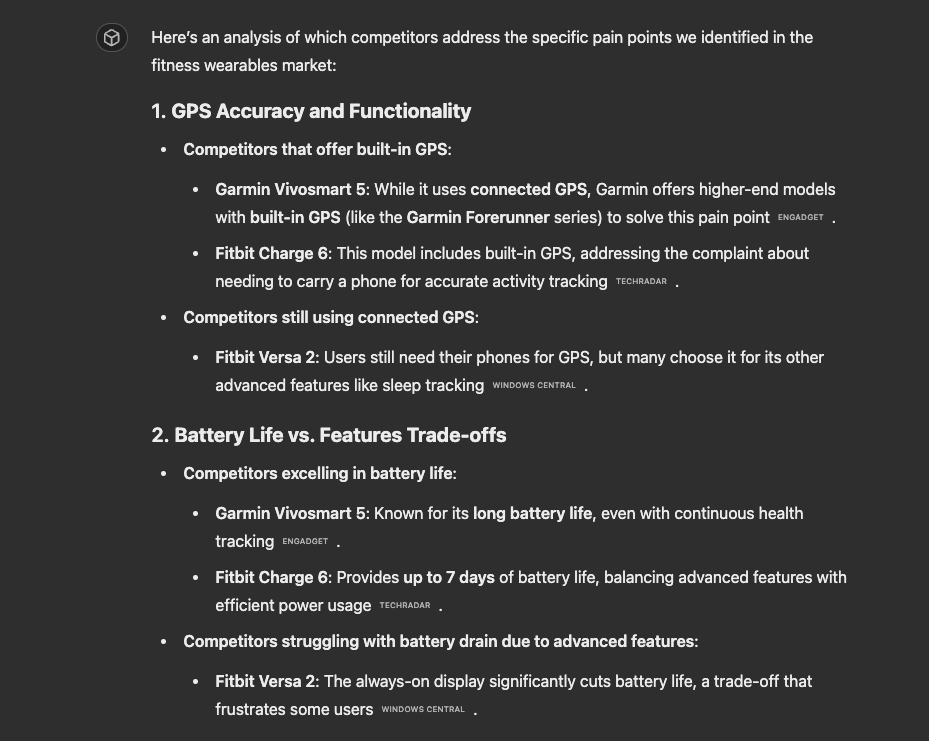
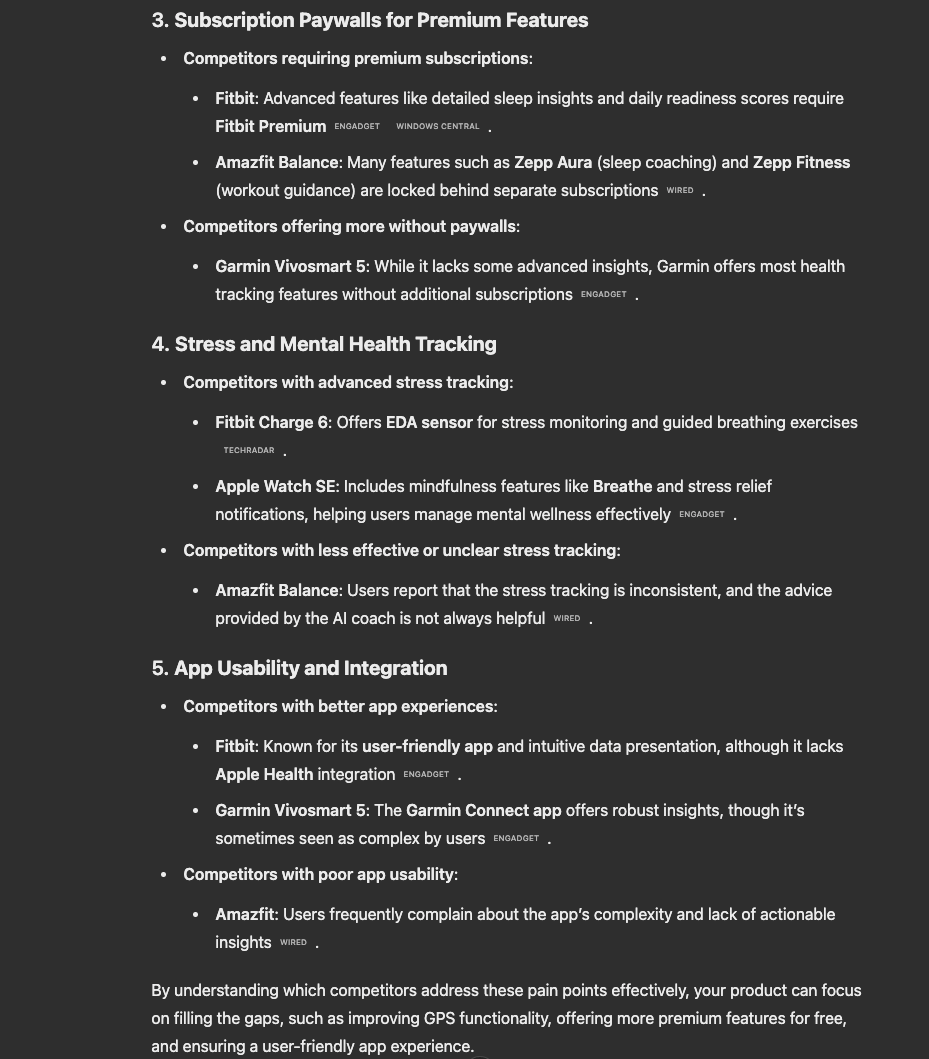
Now Alex has an idea of competitors have gaps in the pain point areas. Their product can now focus on filing the gaps in the market.
Step 5: Synthesize Findings Into Actionable Insights
Alex's prompt:
AI Response:
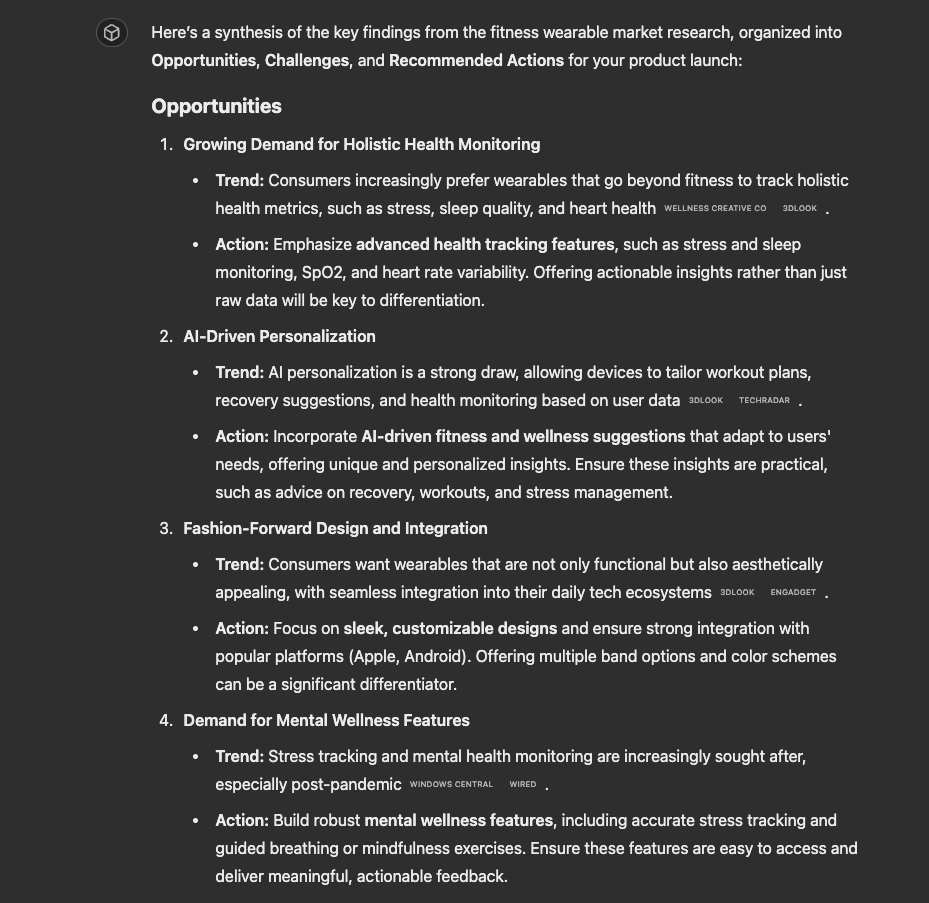
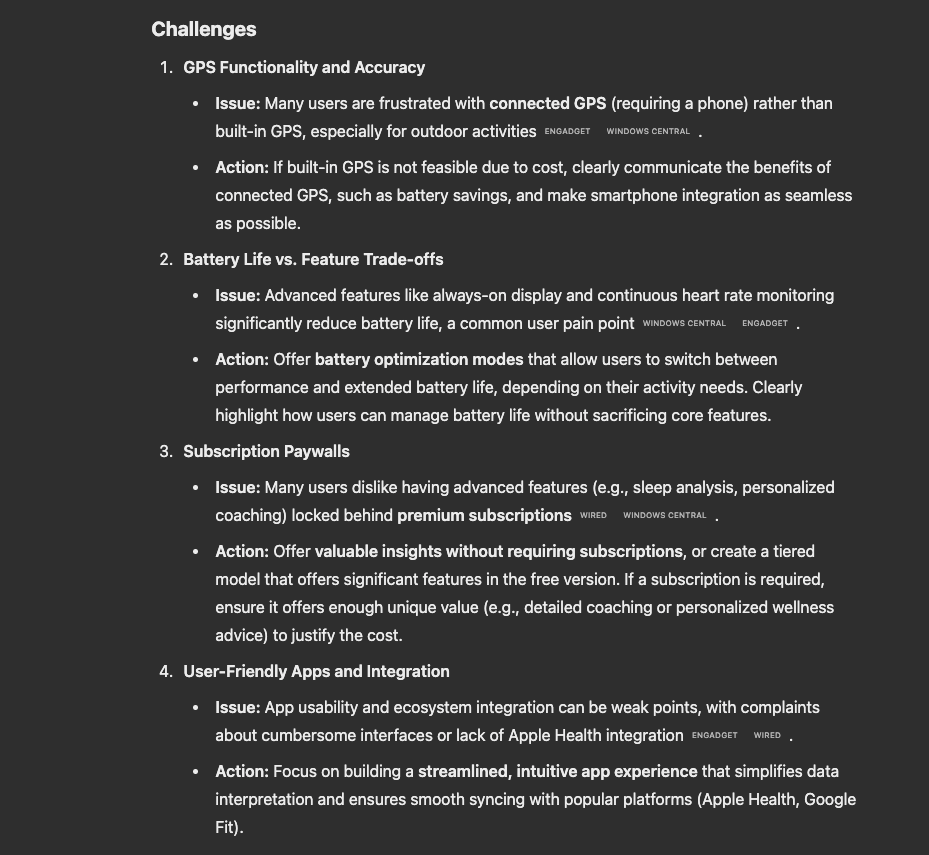
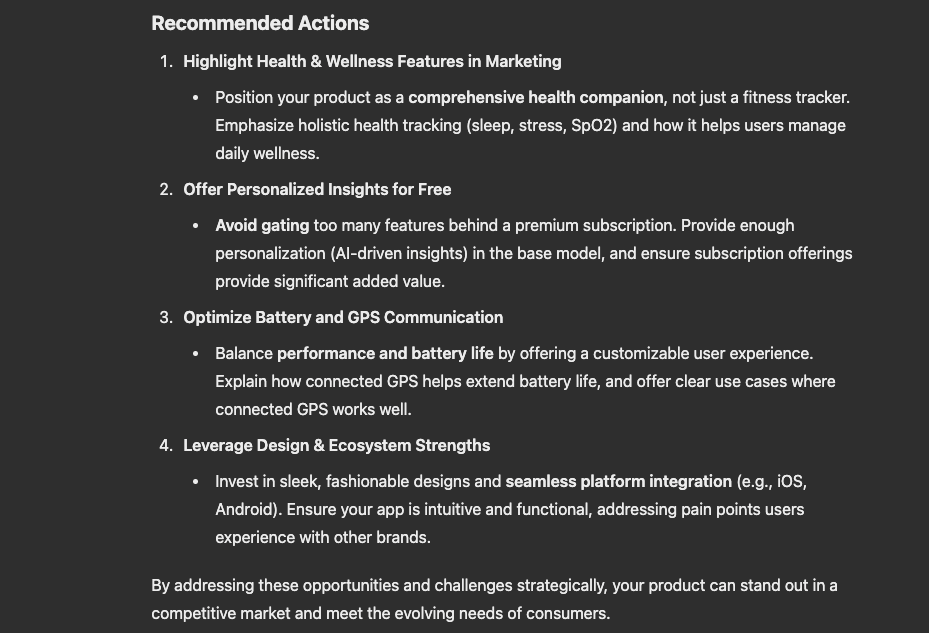
The AI not only summarizes the research but turns it into a tangible action plan, saving you time and providing a starting point for further refinement.
Pro Tips
- Create a research diary where you save effective AI prompts - this helps refine your process for future projects
- Use the "chain of thought" approach: build each prompt based on previous AI responses rather than asking disconnected questions.
- Save key statistics and insights in a separate document as you go. We recommend using the Projects features in ChatGPT or Claude to save key insights. This way, the AI has context for future chats as well.
- When analyzing competitors, alternate between broad market questions and specific product queries to build a comprehensive picture. Always cross check and verify critical data presented by the AI.
- Ask AI to format complex information in different ways (tables, lists, summaries) to gain new perspectives on the data
Considerations
- AI knowledge may have cutoff dates - always verify time-sensitive information from current sources
- Technical specifications and pricing should be cross-referenced with official product documentation
- Market trends identified by AI should be validated against recent industry reports
- Consumer sentiment analysis should be complemented with direct user feedback when possible. Check out "Analyze Customer sentiment with AI" Guide.
Knowledge Check
1 / 5According to the guide, what is the primary benefit of using AI assistants in market research?